 Chris BerryFounder, Wine Underdogs — chasing the world’s overlooked grapes
Most wine regions want you to think they are bigger than they are. Montefalco has 380 hectares of its flagship grape and does not pretend otherwise.
The Consorzio Tutela Vini Montefalco has represented this corner of Umbria since 1981. It covers three denominations — Montefalco Sagrantino DOCG, Montefalco DOC and Spoleto DOC — across five hill villages between Perugia and Spoleto, and its emblem is a falcon, which is not decoration. The town is named for one.
What they are protecting
Sagrantino is the reason anyone knows the name. It has the highest polyphenol content of any wine grape, according to research the Consorzio commissioned from the Istituto Agrario di San Michele all'Adige in 2008, and for years that fact did all the marketing. Its president would now rather you heard something else, which I wrote up separately in Sagrantino Is Getting Softer.
Next to it sit three natives worth your attention. Sangiovese leads Montefalco Rosso DOC, with up to 20% Sagrantino in the blend. Grechetto and Trebbiano Spoletino carry the whites — and Trebbiano Spoletino is the one to watch, grown on ungrafted vines that are frequently over 100 years old and sometimes still married to maple, elm and ash trees in the old way.
The land, in numbers
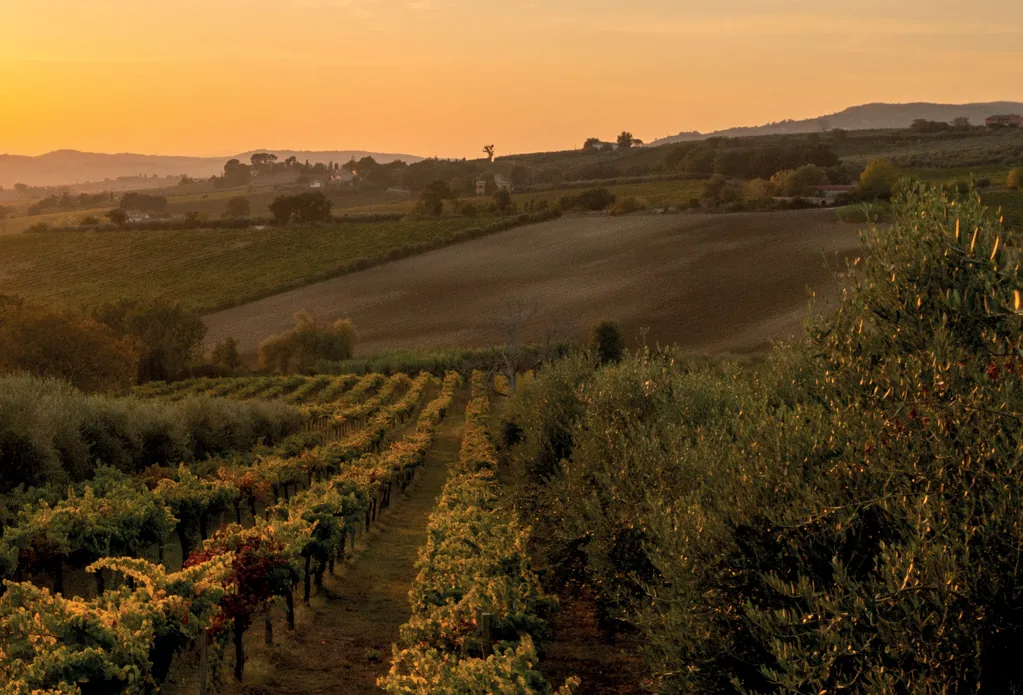
Vineyards sit between 220 and 472 metres on pale, clay-rich, calcareous soil, in a Mediterranean sub-continental climate: summers between 18 and 26.5°C, winters between 4 and 6°C, about 826mm of rain a year with the wettest month in November. The appellation was mapped in detail by Alessandro Masnaghetti, whose subdivision separates the clay-heavy northern sector around Bevagna from the pebblier southern hills of Montefalco proper.
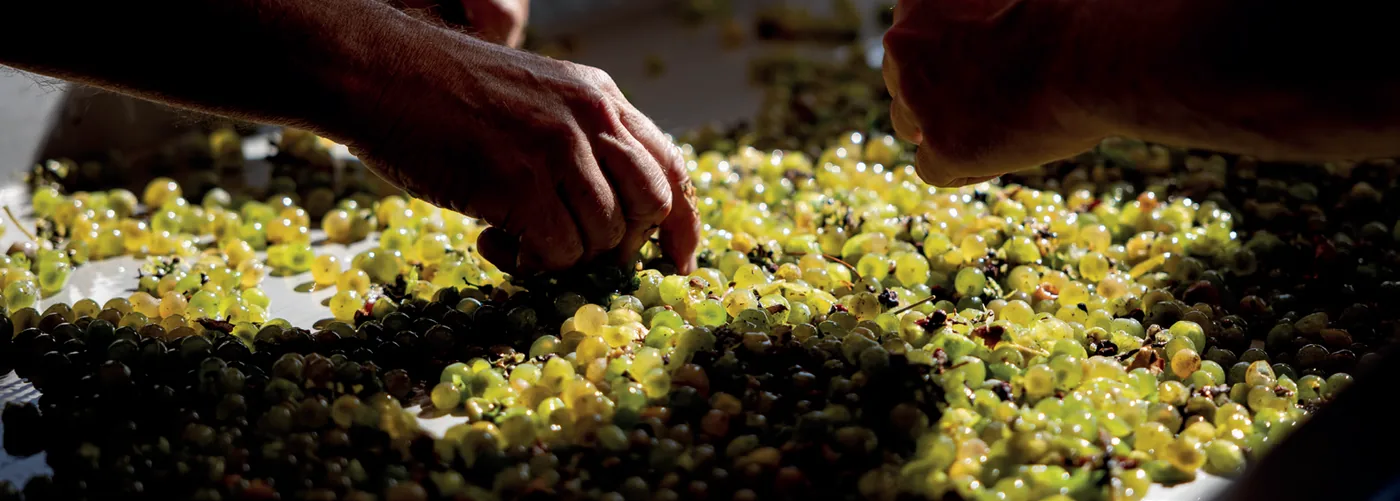
Sagrantino comes off those hills around mid-October, later than almost anything else in Italy.
Where they stand today
Montefalco Sagrantino DOCG was recognised in 1992; the DOC came in 1979. In 2025 the appellation produced roughly 1.34 million potential bottles of Sagrantino DOCG against 3.23 million of Montefalco DOC. Exports account for about 12.5% of production, with the United States the largest single destination at 27% of that, ahead of Sweden at 23%.
The 2022 vintage of Montefalco Sagrantino was rated four stars, an excellent vintage, at 92/100.
The honest caveat
I have not tasted through this appellation, and nothing here is a tasting note. These are the Consorzio's own figures and its president's own words, gathered from their 2026 press materials and an interview I conducted with Paolo Bartoloni.
A trade body's numbers are worth having because they are auditable, and worth reading with the knowledge that promoting the region is the job. Where I could check a claim against a second source in their own documents, I did. Where I could not, I have said so.
If you want to go
Enologica Montefalco runs 18 to 20 September 2026 in the town itself, organised with the Associazione Strada del Sagrantino. The Strada's information centre logged nearly 30,000 visitors over five years, and 84% of the area's wineries also make something else worth carrying home — olive oil, legumes, salami, honey, hazelnuts, saffron.
Montefalco's other reason to visit is on a wall. Benozzo Gozzoli's fresco cycle in the church of San Francesco, commissioned in 1451 and painted in 1452, is a genuine document of the medieval Umbrian countryside, and the Sagrantino Museum opened inside the same complex in 2024.
Frequently asked questions
What does the Consorzio Tutela Vini Montefalco actually do?
It was established in 1981 and now has 118 members, 65 of them wineries. It enforces the production rules for Montefalco Sagrantino DOCG, Montefalco DOC and Spoleto DOC, and promotes the wines abroad. From 2021 for Montefalco and 2025 for Spoleto, the rules require the word 'Umbria' on the label.
How big is the Montefalco appellation?
Small. Around 380 hectares registered to Montefalco Sagrantino DOCG, around 510 to Montefalco DOC, and around 50 to Spoleto DOC. In 2025 there were 133 winemakers across the Montefalco denominations and 74 wineries, 64 of which are Consorzio members.
Are Montefalco wines organic?
Largely. The Consorzio reports that 56% of the wineries producing its DOC and DOCG wines farm certified organic or are converting, and the remainder hold biodynamic, homeodynamic or natural certifications or use organic products under conventional methods.
Which villages are inside the Montefalco denominations?
Montefalco itself, plus Bevagna, Castel Ritaldi, Giano dell'Umbria and Gualdo Cattaneo. Spoleto DOC covers the valleys towards Trevi, Campello sul Clitunno and Foligno.
When is Enologica Montefalco?
18 to 20 September 2026, in Montefalco. Three days of tastings, workshops and cellar visits run by the Consorzio with the Associazione Strada del Sagrantino.
FREE DOWNLOAD
Get the Underdog Starter List
10 lesser-known bottles under $25 worth chasing — plus the weekly underdog read. No snobbery, just good wine.