

 Chris BerryFounder, Wine Underdogs — chasing the world’s overlooked grapes
Xynisteri is the white grape of Cyprus, and the one to start with. It is the island's most planted white, one of the two grapes allowed in Commandaria, and the variety most likely to be the first Cypriot wine you ever see on a shelf.
Say it: ksee-nee-STEH-reerecorded by Anastasia Konstantopoulou
Its reputation is modest. Several sources describe it as light, low in acid and short on aroma. The more useful question is where that reputation came from, and the answer is mostly the vineyard.
The grape in brief
The international grape register, VIVC, lists Xynisteri as a white variety from Cyprus with no known parents and 22 synonyms, among them Xinisteri, Aspro Kyprou and Koumantaria. That last one is a clue to its oldest job.
According to wein.plus, it covered 1,946 hectares in 2022, out of about 7,330 hectares of vineyard on the island. Like every vine on Cyprus, it grows on its own roots, because phylloxera never reached the island.
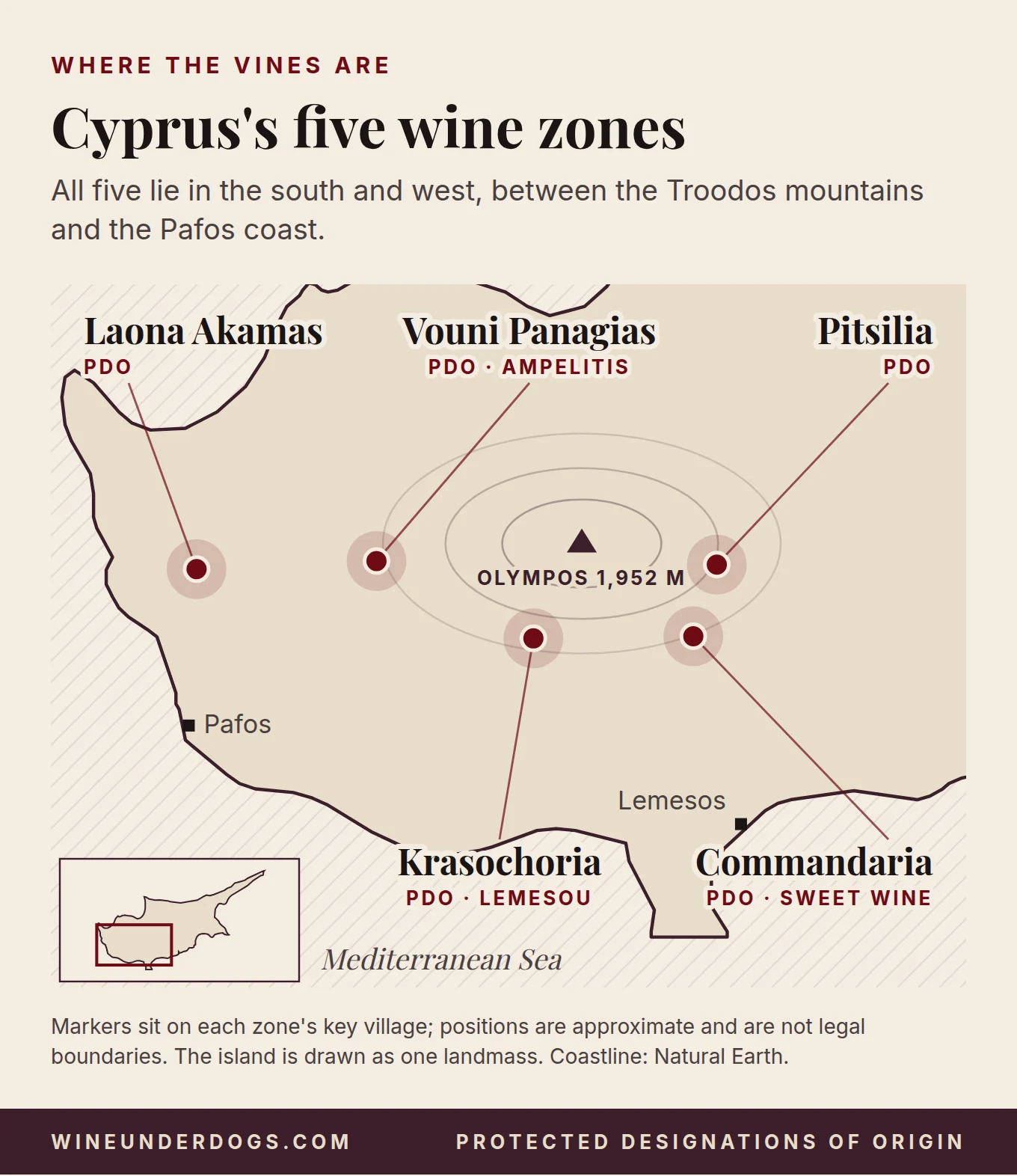
The Cyprus Wine Museum names Laona Akamas, Ambelitis, Vouni Panayia and Pitsilia among its areas, and more than one source says the best examples come from higher vineyards.
Why altitude changes it
Anastasia Konstantopoulou, Head Oenologist at LionSpirit Winery & Distillery in Cyprus, puts the reputation down to history rather than the grape:
I think Xynisteri's reputation for being light and low in acid says at least as much about how and where it was historically grown as it does about the variety itself.
Cooler, higher sites slow the ripening, which gives the grape more time to build flavor and gives the winemaker a wider window to pick. She is careful not to oversell it:
So I would not say that altitude turns Xynisteri into a completely different grape. It allows a different side of the variety to emerge. At its best, it can retain the lightness and drinkability that are naturally part of its character, while gaining much more aromatic definition, texture and sense of place.
What it tastes like, according to whom
Nobody agrees completely, and that is worth knowing before you buy.
- Wine Origins lists lemon, green apple, peach, apricot and floral notes, and compares the style to Chablis.
- Exotic Wine Travel finds lime and pine, and calls it a fairly neutral grape.
- The Cyprus Wine Museum says it is not intensely aromatic and is low in alcohol and acidity.
The chemistry suggests there is more there than "neutral." A study of Cypriot white wines published in OENO One found aroma compounds called thiols, the same family that gives Sauvignon Blanc its grapefruit and passion fruit, at levels above what people can detect.
A grape built for heat
A three-season study in Cyprus, Copper and colleagues in OENO One (2020), grew Xynisteri beside Maratheftiko, Shiraz and Sauvignon Blanc. Xynisteri kept the best water status of the four, produced far more fruit (an estimated 16.9 tonnes per hectare in 2019, against 8.1 for Shiraz and 6.5 for Sauvignon Blanc), and ripened in late September or early October, weeks after the international grapes.
Konstantopoulou's warning is that resilience buys time rather than immunity. "It gives me a wider window, not immunity from heat and drought," she writes. The grapes still have to be read at harvest.
How to drink it
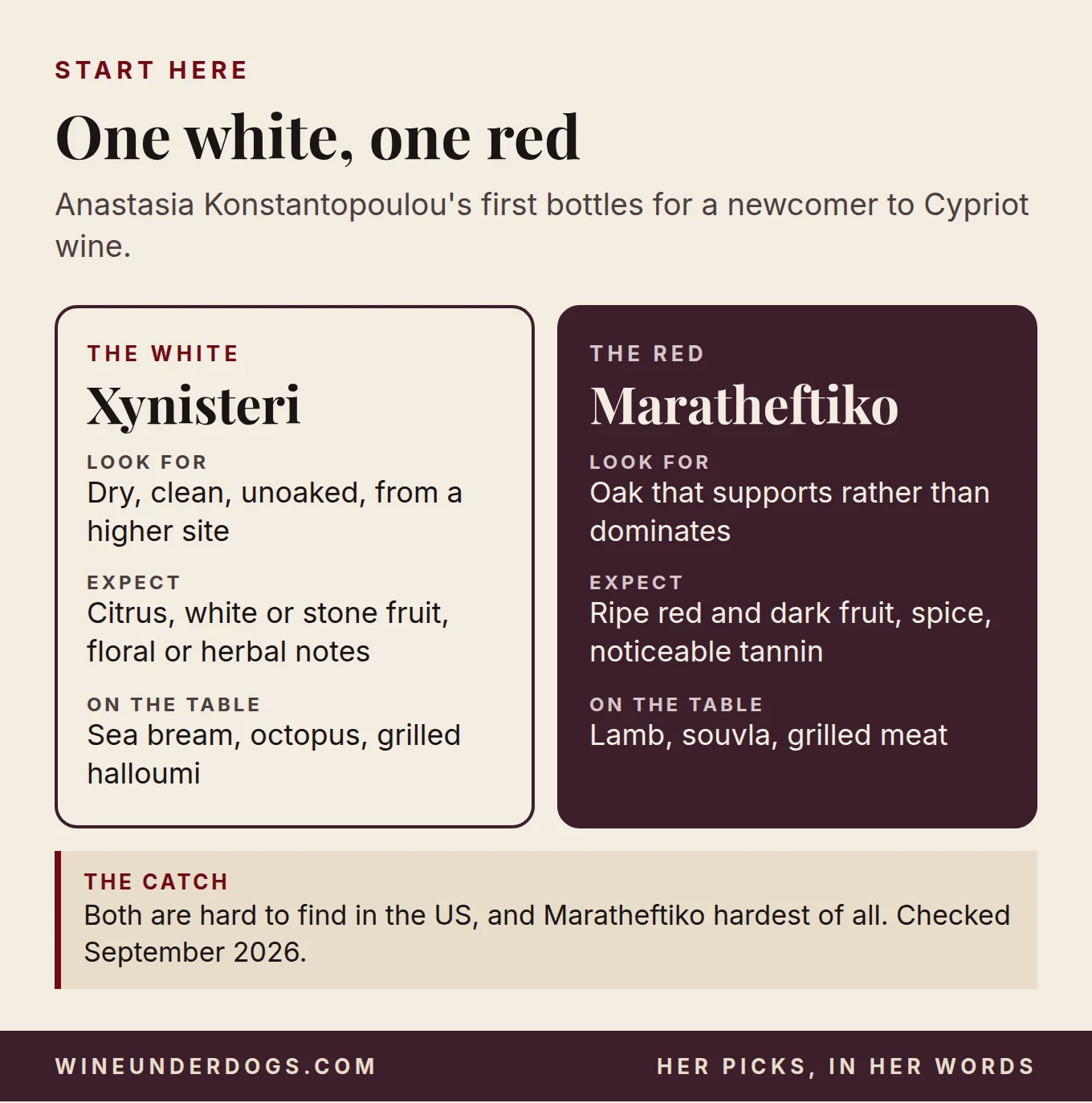
Her advice for a first bottle is specific: a dry, clean, unoaked Xynisteri, preferably from a higher site. Expect citrus, white or stone fruit and floral or herbal notes. Put it beside grilled fish, octopus or grilled halloumi.
Drink the fresh, unoaked style young. The Cyprus Wine Museum says the grape is not made for long ageing, while Exotic Wine Travel points to barrel-fermented bottlings from producers such as Kyperounda and Zambartas that are built to last longer. If the label says oak, keep it a few years; if not, open it now.
What to eat with it
Xynisteri drinks the way Cyprus eats, which is to say around a table of small plates. The fresher, higher-altitude bottlings suit grilled halloumi, seafood and grilled fish, lemony chicken, and a spread of meze. The acidity cuts the salt in the cheese and the oil in the fried dishes, and the lighter versions make an easy aperitif on a hot day. Serve it well chilled and let it play the long, grazing meal it was made for.
Where to find a bottle
On 25 September 2026, wine.com, the retailer this site works with, had no Xynisteri at all, so there is no buy link here. Wine-Searcher's US listings showed five bottles that day, from producers including Tsiakkas, Vouni Panayia and Zambartas, at roughly $20 to $30. Whether a seller can ship to you depends on your state.
For the wider picture, read Cyprus wine grapes, from a head oenologist, and the pages on Maratheftiko and Commandaria.
New to wine? Start here

Wine Match
Five guilty pleasures, yes or no. Ben finds the wine you’d actually like. You don’t need to know anything about wine. Ben certainly doesn’t.
Wine Underdogs is for readers of legal drinking age.
BenFive things. Yes or no. I'll do the rest.
Every wine fact here comes from the grape guides on Wine Underdogs. Ben has never opened a bottle, and neither does this game. For readers 21 and over.
Frequently asked questions
What does Xynisteri taste like?
Descriptions vary by source and site. Wine Origins lists lemon, green apple, peach, apricot and floral notes; the Cyprus Wine Museum says the grape is not intensely aromatic. Head Oenologist Anastasia Konstantopoulou says higher sites give it more aromatic definition and texture.
Is Xynisteri the same as Xinisteri?
Yes. Xinisteri is an alternate spelling, used for example by the Cyprus Wine Museum. The international grape register VIVC lists 22 synonyms for the variety.
Where can I buy Xynisteri in the United States?
It is not stocked by wine.com as of September 2026. Wine-Searcher lists a handful of US sellers carrying bottles from producers such as Tsiakkas, Vouni Panayia and Zambartas, at roughly $20 to $30.
What food pairs with Xynisteri?
Cypriot meze and the table it belongs to: grilled halloumi, seafood and grilled fish, lemony chicken, and small plates. Its acidity cuts the salt in the cheese and the oil in fried dishes, and the lighter, higher-altitude versions make an easy hot-weather aperitif. Serve it well chilled.
JOIN THE PACK
Whatever you drink now, there's an underdog you'd like more.
One overlooked wine at a time: what it tastes like, the famous one it can replace, and the catch. Free.