
 Chris BerryFounder, Wine Underdogs — chasing the world’s overlooked grapes
Most of Mendoza bets on Malbec. Pócima, the last winery before the mountains, bottles sixteen single varietals instead, and six of them are grapes you will rarely find alone on an Argentine label.
Emilio Abrahan puts the case in one line. Most wine regions can speak convincingly for five or six grapes. His family's winery in Los Árboles, Tunuyán, is trying to show that this corner of the Valle de Uco can speak for nearly three times that, in small lots, with the whole family on the payroll.
A family that stopped working for other people
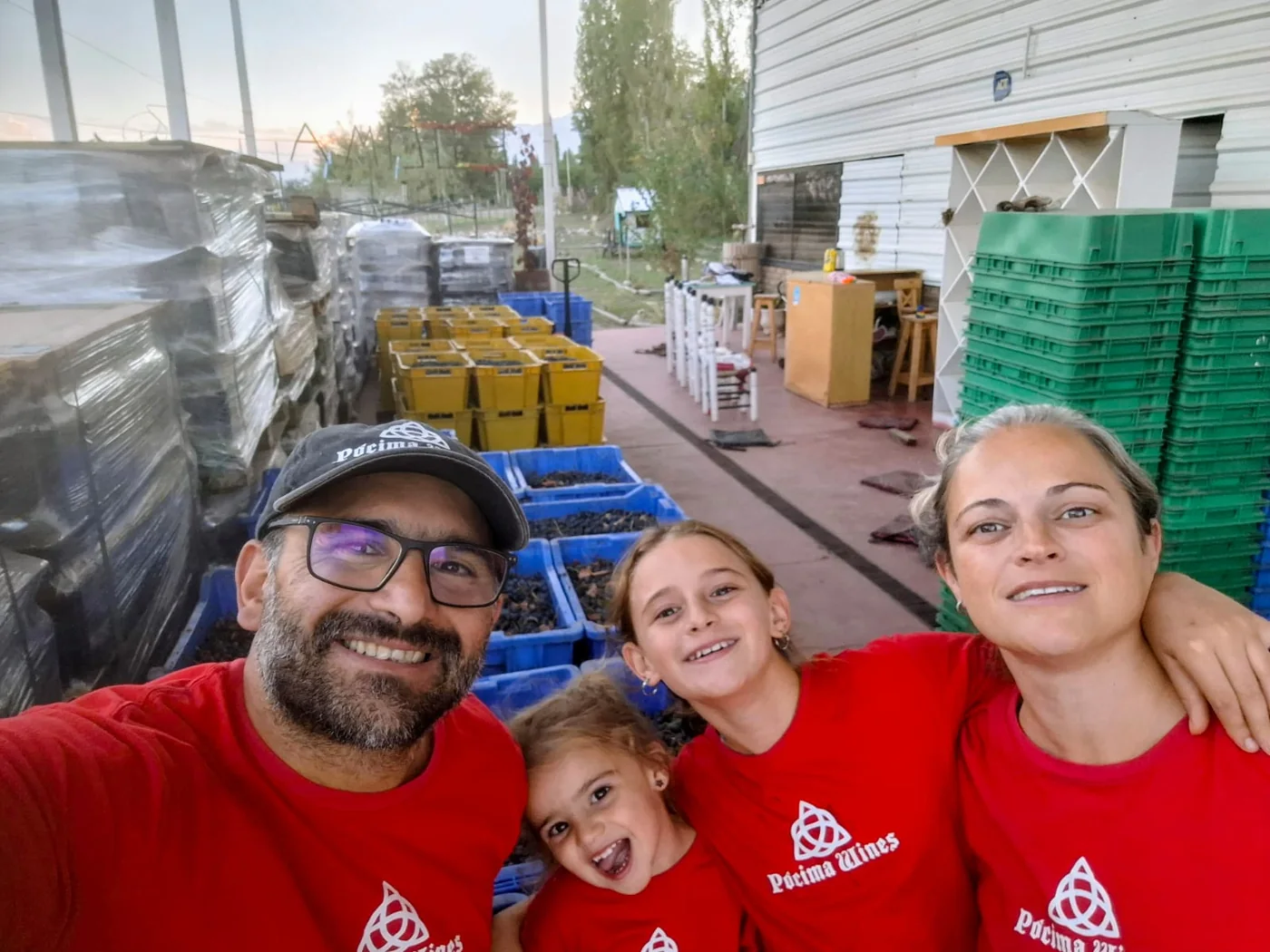
Pócima is Emilio, his wife Analía Fortunato and their daughters Mora and Ema. Their motto is grandes vinos hechos en familia, great wines made by a family, and it is less a slogan than a description of the staff list.
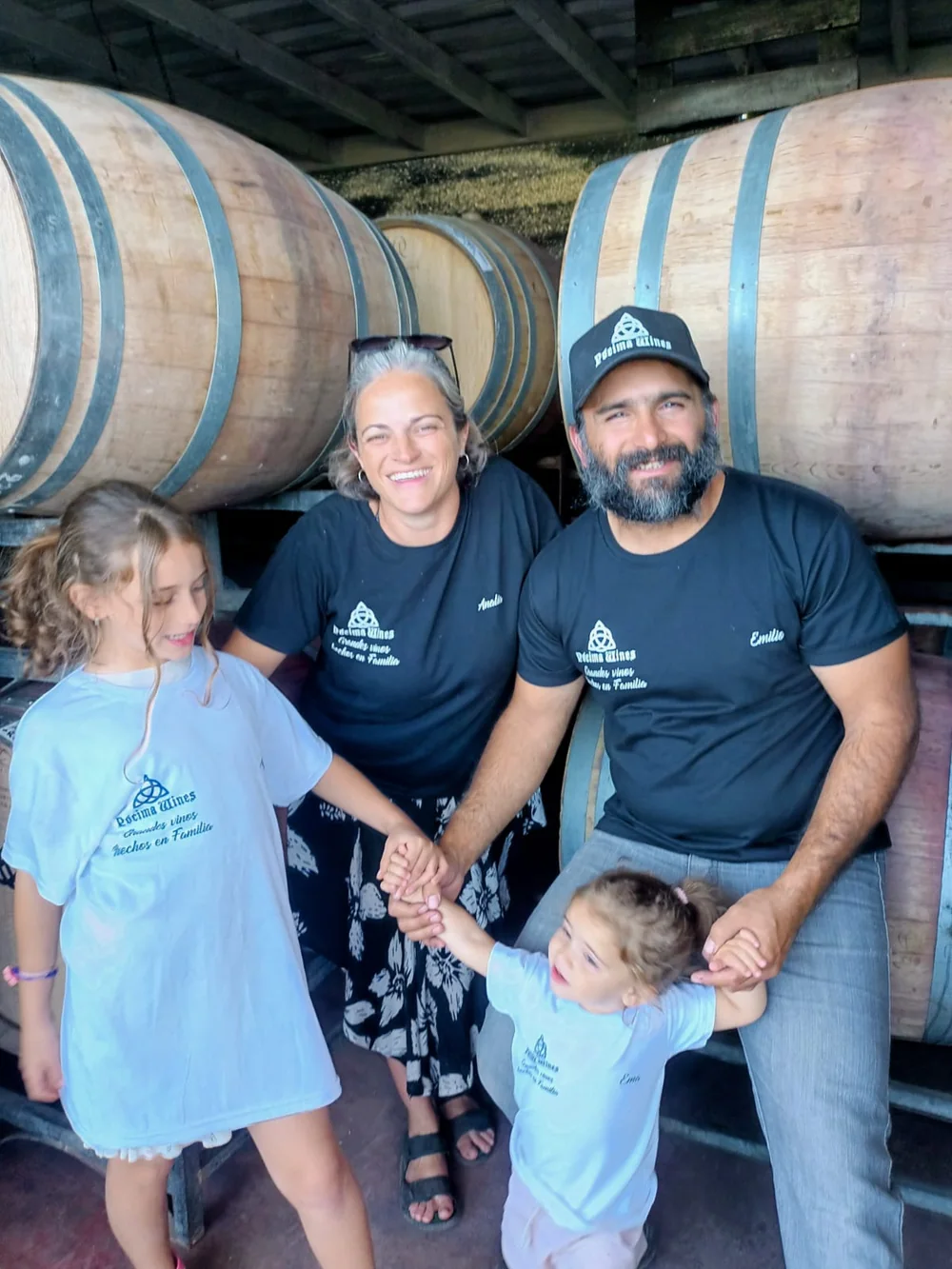
Emilio is a trained enologist who spent more than a decade making wine for well-known Mendoza houses and taught enology at the Universidad Maza's Valle de Uco campus. At some point he and Analía did the arithmetic that most good winemakers on someone else's payroll eventually do. Working for themselves, at small scale, the wine could carry their own identity. The brand dates to 2013, and they have made wine in their own cellar since 2019.
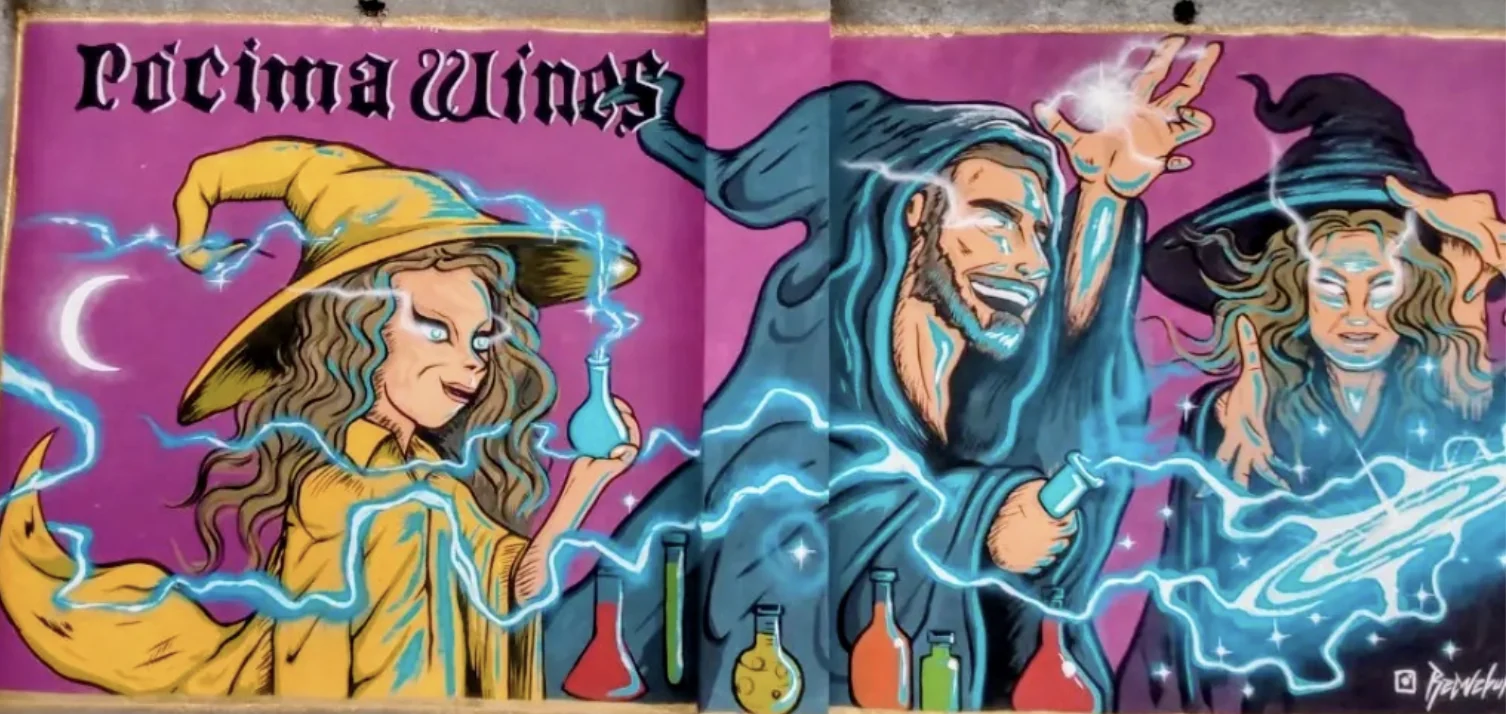
The name carries its own joke. Pócima means potion, and the label is a triquetra, the three-cornered knot the family ties in its brand materials to old stories of magic and brewing. The mural on the winery wall, at the top of this page, takes the idea further. For a winery whose method is mixing more grapes than anyone else in the valley, it fits.
The last winery before the mountains
Pócima sits at the foot of the Cordillera Frontal, and Emilio describes it as the last winery on the wine route, the one closest to the mountains. Their vineyards average about 1,270 metres (about 4,170 feet), and nearly everything they work is above 1,200.
That height does two jobs, and he names both. The gap between hot days and cold nights is what lets the skins and seeds ripen fully, which is where he believes a great wine starts. The cold also keeps malic acid in the grapes, so the fruit arrives at the cellar with its own acidity. His goal is wine with concentration that still reads as elegant, and he is clear that elegance is the harder half.
The soils are alluvial mountain soils, heavy with stone and sand, and they drain fast. In practice that buys patience. When rain threatens at harvest the vines are not left standing in water, and the family can wait for the pick they want rather than the one the weather forces.
About 80% of what they make comes from within roughly ten kilometres of the cellar. Besides their own small vineyard, they work long-term with neighbouring growers whose parcels they chose, and each year they select what Emilio calls pedacitos de parcela, little pieces of parcels, to suit the vintage. He compares it to how the great wines of the world are made. That is a large claim for a small winery. The method behind it is the right one.
Sixteen varietals, and why that is the story
Here is what brought them to this site. The family bottles sixteen single-varietal wines in limited lots, and commits to making each one again rather than dropping it after a vintage. Add the blends and the one-off lots and the list passes twenty.
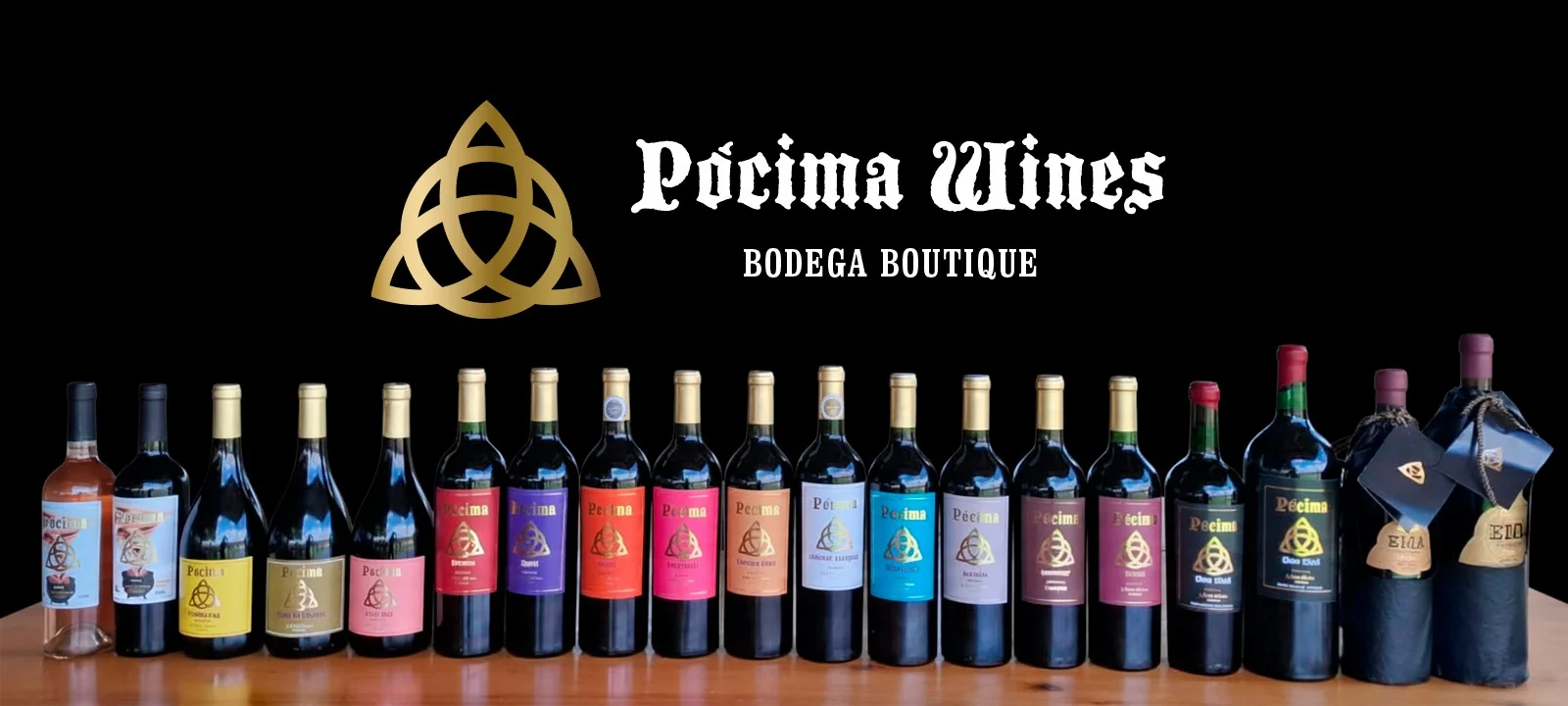
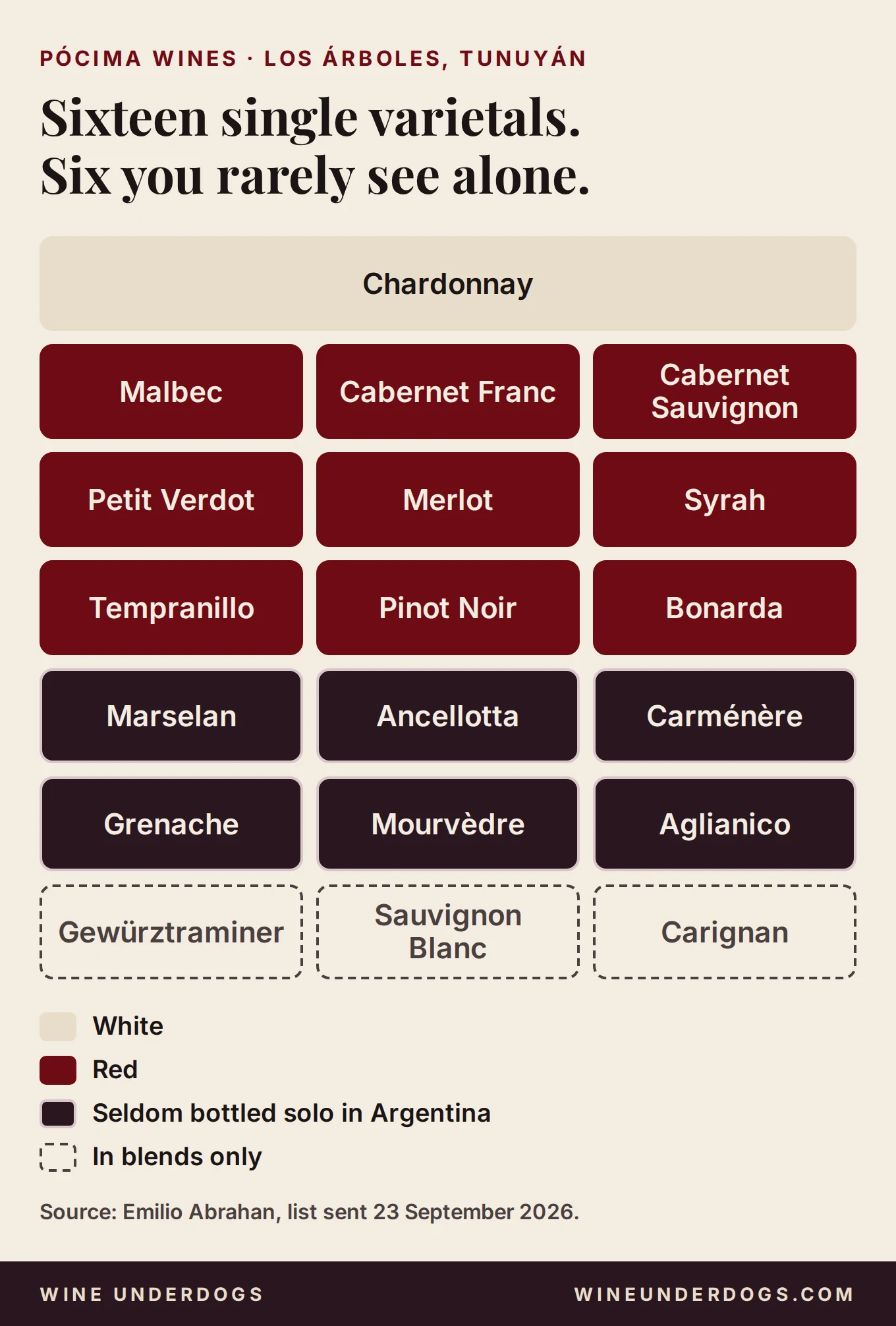
The range, by his list:
- White. A Chardonnay fermented in barrel with 14 months on fine lees. Gewürztraminer and Sauvignon Blanc appear only in the white blend, which is built on Chardonnay.
- Rosé. A 100% Petit Verdot rosé, at least six months in barrel.
- Single-varietal reds. Malbec, Cabernet Franc, Cabernet Sauvignon, Petit Verdot, Merlot, Syrah, Tempranillo, Pinot Noir, Bonarda, Marselan, Ancellotta, Carménère, Grenache, Mourvèdre and Aglianico.
- Blends. A red of Malbec, Cabernet Franc and Petit Verdot, and a larger blend of ten or more varieties that works as a summary of each vintage.
A few of those need a word. Marselan is a French crossing of Cabernet Sauvignon and Grenache, bred in 1961. Ancellotta comes from Emilia-Romagna, where its main job is lending colour to Lambrusco. Aglianico is southern Italy's great tannic red, and Mourvèdre is the backbone of Bandol. Finding any of them bottled on its own in Mendoza is the kind of thing this site exists to point at. Grenache, Mourvèdre and Aglianico are the newest of the sixteen, and they came out of the family's research rows.
None of it is made to drink young. The reds spend at least 14 months in barrel, most of them about twenty, which Emilio calls "two winters," and some two full years in oak.
Historias, and a wine called Ema
The Historias line holds the one-off lots, wines made, in Emilio's words, to tell the family's stories. One is the pure Carménère, which he says is almost unheard of in Argentina and barely grown in the Valle de Uco. Another blends Marselan, Ancellotta, Carménère and Carignan, four grapes you would struggle to find sharing a bottle anywhere.
Above those sits the family's icon wine, Ema Edición Limitada, and it carries the best story in the cellar. Eight years after Mora was born, Emilio and Analía learned the family was growing. When a scan said it was probably a girl, the three of them held a vote on slips of paper, and the winning name was Ema, with one m. Not long after she arrived, they noticed by chance that the name spells the family's initials: Emilio, Mora, Analía. So the wine is the three of them welcoming the fourth, and all four are in the bottle.
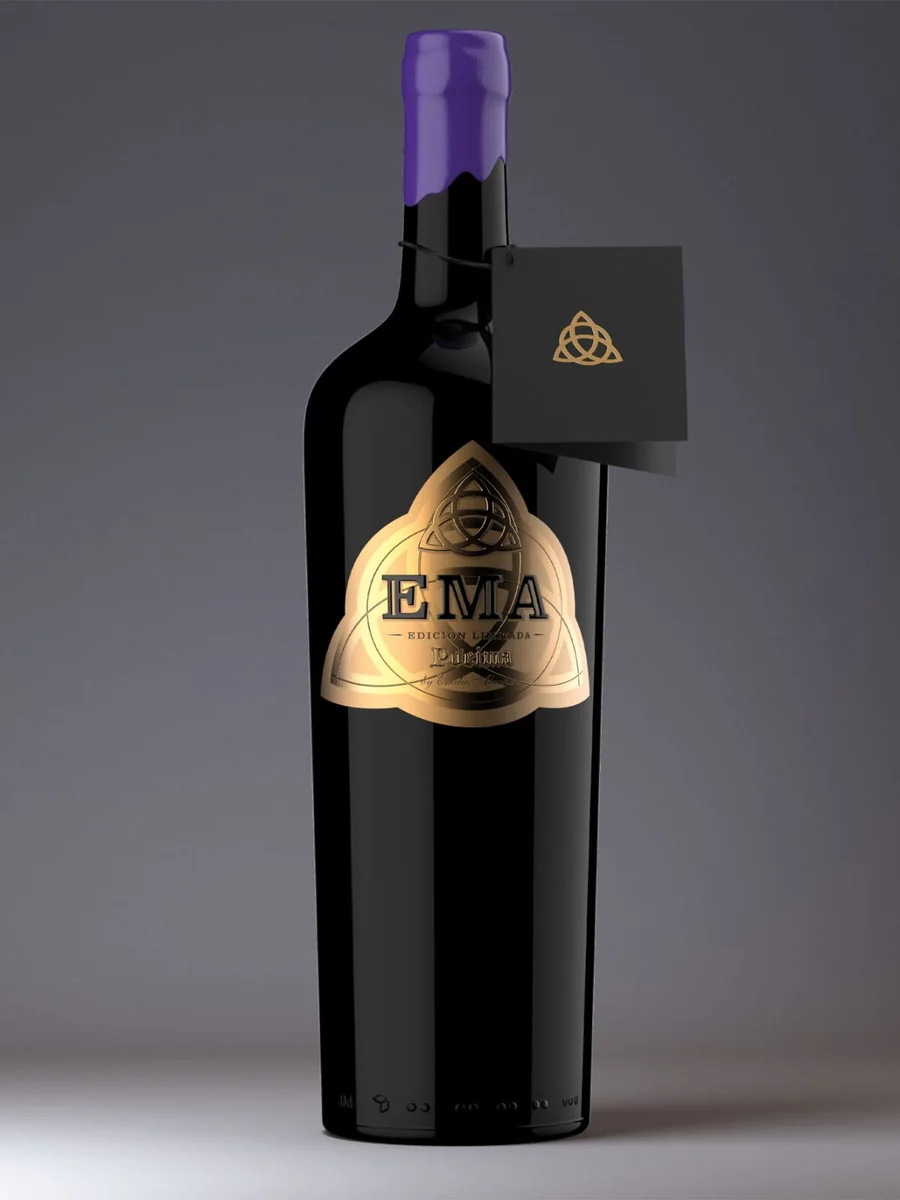
It begins with the 2022 vintage, the year Ema was born, in May, which means she was there for that whole harvest. The family chose the wine by tasting every barrel they had, one at a time. The blend they settled on is 55% Malbec from two parcels in Los Árboles and Los Chacayes, with 15% each of what they judged the best Cabernet Sauvignon from Los Árboles and the best Merlot and Tempranillo from Los Chacayes. It spent two years in oak. Emilio calls it "the wine that represents us," and after that story it is hard to argue.
Where to find them
Pócima is not in the United States, and on purpose. The family sells direct from the cellar, and wine tourism is the engine: plenty of American visitors come through Los Árboles and leave with bottles in their luggage. So there is nothing for me to sell you here.
If you are going to Mendoza, the Tunuyán tourism office lists them as open seven days a week by reservation, near the Manzano Histórico, with tastings and an underground cellar. Book through @pocimawines on Instagram. If you are not going, Emilio's advice travels anyway:
"Dare to try varietals out of the ordinary, because here they grow really, really well."
— Emilio Abrahan, Pócima Wines (translated from Spanish)
New to wine? Start here

Wine Match
Five guilty pleasures, yes or no. Ben finds the wine you’d actually like. You don’t need to know anything about wine. Ben certainly doesn’t.
Wine Underdogs is for readers of legal drinking age.
BenFive things. Yes or no. I'll do the rest.
Every wine fact here comes from the grape guides on Wine Underdogs. Ben has never opened a bottle, and neither does this game. For readers 21 and over.
Frequently asked questions
Where can I buy Pócima wines in the US?
Nowhere yet. Pócima sells direct from its cellar in Los Árboles, Tunuyán, and does not export at scale. Visitors can taste and buy there by reservation, seven days a week, according to the Tunuyán tourism office.
Where is Pócima Wines?
In Los Árboles, Tunuyán, in Mendoza's Valle de Uco, at the foot of the Cordillera Frontal near the Manzano Histórico. Its vineyards average about 1,270 m above sea level.
How many wines does Pócima make?
More than twenty. The family bottles sixteen single varietals in limited lots, plus white, rosé and red blends and one-off lots in its Historias line. Gewürztraminer, Sauvignon Blanc and Carignan appear only in blends.
Which unusual grapes does Pócima grow?
Among others, Marselan, Ancellotta, Grenache, Mourvèdre, Aglianico and a pure Carménère, which Emilio says is almost unheard of in the Valle de Uco. All six are bottled on their own.
Can I visit Pócima?
Yes, by reservation, seven days a week, according to the Tunuyán municipal tourism listing. Visits include tastings and the family's underground cellar. Reservations go through @pocimawines on Instagram.
What is Ema?
Pócima's icon wine, a limited edition first made in 2022, the year the family's younger daughter Ema was born. Her name spells the family's initials: Emilio, Mora, Analía. The 2022 is 55% Malbec with 15% each of Cabernet Sauvignon, Merlot and Tempranillo, from Los Árboles and Los Chacayes, aged two years in oak.
JOIN THE PACK
Whatever you drink now, there's an underdog you'd like more.
One overlooked wine at a time: what it tastes like, the famous one it can replace, and the catch. Free.