
 Chris BerryFounder, Wine Underdogs — chasing the world’s overlooked grapes
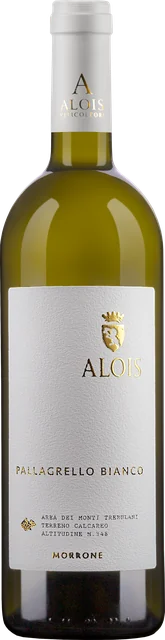
Try Casavecchia: a dark, tannic red from the hills north of Naples that tastes of berries, chestnut and a little smoke. Its white neighbor, Pallagrello Bianco, is saline and grapefruit-sharp. Thirty years ago you could not legally make a bottle of either.
The family that brought them back weaves silk in San Leucio, the royal silk village beside the Reggia di Caserta. I asked Massimo Alois, who runs the estate his father Michele founded in 1992 in the valley of Pontelatone, how a textile family ended up rescuing three grapes Italy had written off. He answered in Italian, by voice note, over an afternoon. What follows is translated from those recordings.
The range · 9 wines from Alois
See all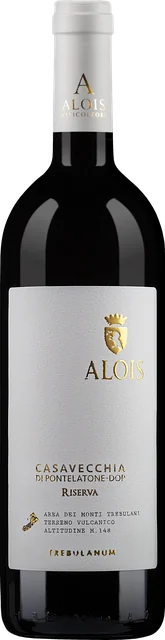
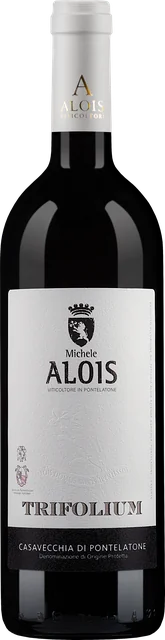
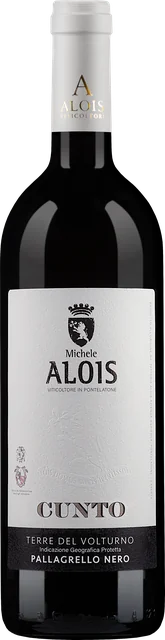
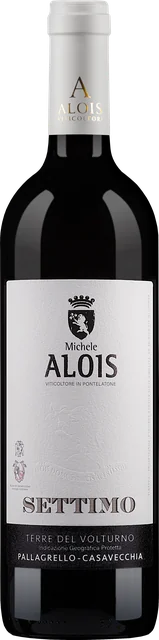
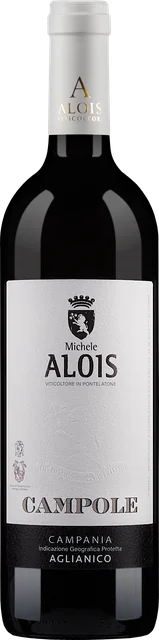
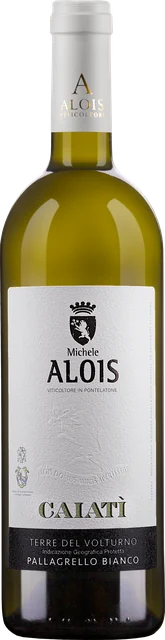
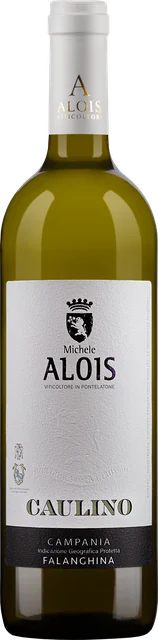
Silk first, then wine

The story starts with the Bourbons, who took the throne of Naples in 1734. From 1752 they built the Reggia di Caserta, an enormous palace inland, out of reach of English ships. Beside its park they founded San Leucio, a small walled village with a silk works, given its own laws in 1789.
"They wanted to show their French cousins, and their cousins in Spain, that they too had beautiful silks," Massimo told me. Louis XVI's queen, Marie Antoinette, was the sister of Naples' queen, Maria Carolina. The rivalry was in the family.
The Alois family has worked in that trade ever since. After Italian unification in 1861 the works stopped being a state enterprise, and the family wove on privately. The record catches them two years later: an 1863 government census of the silk trade lists Francesco Alois, born in 1825, with five looms of his own, according to L'Altra Caserta, Massimo's own history of the San Leucio silk community, built on the Caserta state archive. The weaving company dates its own founding to 1885, and Massimo counts Francesco as the thirteenth generation of the family. Today, he says, they run more than a hundred looms, and the technique is Jacquard: the pattern is woven into the cloth, not printed on it.
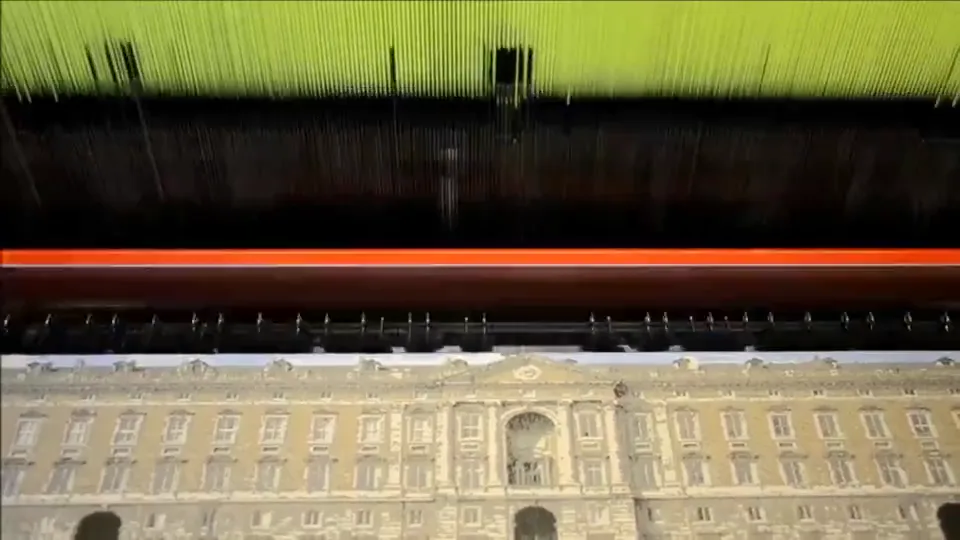
"Il Vaticano è pieno di stoffe di San Leucio."
"The Vatican is full of San Leucio fabrics."
— Massimo Alois
The Vatican part checks out for the village as a whole. Antico Opificio Serico, another San Leucio workshop, has made silk for the Vatican and ceremonial garments for Benedict XVI, Aleteia reported in 2023, and Euronews counts the White House and the Pope among its customers. Alois's own press page lists a fabric offered to Pope Francis in July 2014.
He also told me San Leucio cloth helped dress the White House, and here the trail runs through New York. Iris Apfel and her husband Carl ran Old World Weavers, a firm that reproduced historic fabrics and worked on the White House for nine presidents, from Truman to Clinton. They crossed to Europe twice a year to find the weavers, and a Venetian mill, Luigi Bevilacqua, says it made velvets for them. Massimo says his grandfather's looms were among their suppliers, and his book gives the Truman years a chapter of their own. In 2019 he and Apfel met at the Wall Street Journal's offices in New York, and his video of that morning is on his YouTube channel. I haven't yet found anyone outside the family who names the Alois mill as a supplier, so that last link is his account.
The wine was always there too. "There were eleven Bourbon vineyards at San Leucio," he said, and they grew Pallagrello Bianco and Pallagrello Nero alongside varieties from Sicily, Puglia and Calabria. The family's own history page features one of them, the Vigna del Ventaglio.
How three grapes went underground
Two things nearly finished them, he says.
First, politics. In 1861 Italy was unified under the Savoy kings of Piedmont. They let go of much of what the Bourbons had built in the south, and the old vineyards went with it.
Then phylloxera, the root louse that wiped out Europe's vines. By his account it did not reach Campania until the 1920s, decades after France, and the north replanted onto American rootstock long before the south did.
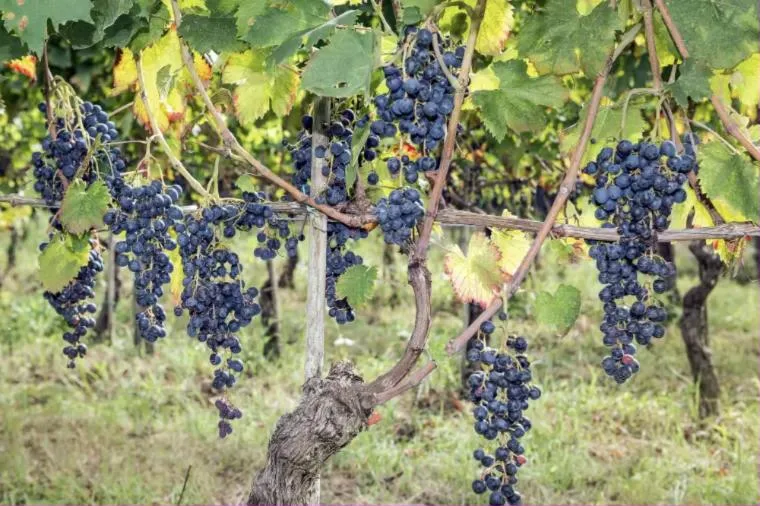
So when the revival came in the 1990s, there was not much left to revive. What the family found were survivors: vines more than two hundred years old, high enough up the hills to have escaped.
"Erano dei ceppi abbastanza grandi, grandi come due braccia che vogliono fare un cerchio."
"They were big stocks, as big as two arms making a circle."
They took buds from those plants and grafted them onto American rootstock. A first attempt on wild European rootstock failed: the vines dried out after four or five years. Alongside Pallagrello Bianco, Pallagrello Nero and Casavecchia they replanted others, Mangiaguerra and Coda di Pecora among them, but only the three won official recognition, at the end of the 1990s.
Until then, he says, nobody could legally produce them.
"Erano, diciamo, clandestine."
"They were, let's say, clandestine."
Registration on Italy's national list of authorized varieties followed, and the three have since spread across Alta Campania.
What the three taste like, in his words
I haven't tasted the Alois wines yet. These descriptions are Massimo's, not mine, and I'll add my own when I've opened a bottle.
| Grape | Color | How Massimo describes it |
|---|---|---|
| Pallagrello Bianco | White | Medium acidity, very saline, sometimes a bitter edge. Grapefruit "more than lemon", with anise and fennel. Ages beyond ten years from high, limestone sites |
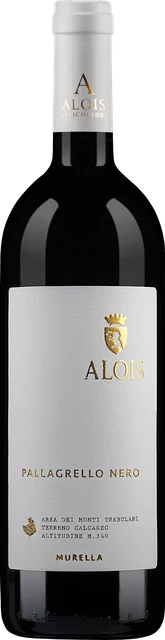
| Pallagrello Nero | Red | Juniper and pink pepper. Tannins that can run "a bit too spiced" |
| Casavecchia | Red | Berries, plum jam, chestnut, mushroom, a slightly smoky note. Powerful tannins, "but not drying ones; tannins that are very silky" |
Of the two reds, he says, "the main characteristic is the tannic side: the tannin prevails over the fruit." That is the honest catch with Casavecchia. It is not a wine to sip on its own on a weeknight.
Three vineyards, mapped to the meter
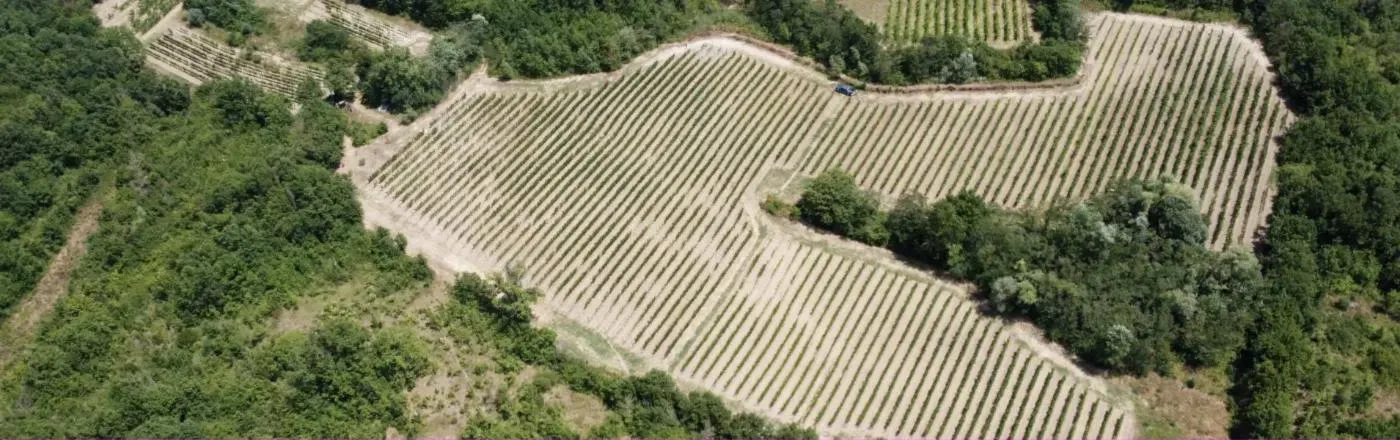
Massimo sketched Campania for me the way a local would. Inland, three mountain ranges carry the region's famous names: the Taburno, with Aglianico del Taburno and Falanghina; the Partenio, with Greco and Fiano; and the Picentini, with more Fiano and Taurasi. Alois sits further north, near the old volcano of Roccamonfina, in a valley between two lower ranges, the Tifatini and the Trebulani. That valley is where Casavecchia di Pontelatone and Pallagrello are made.
The family's top wines each come from a single vineyard. Morrone (Pallagrello Bianco) and Murella (Pallagrello Nero) sit side by side at 360 to 370 meters, about two hectares each, on limestone. Trebulanum (Casavecchia) is lower, on a slope from 148 to 160 meters, on volcanic ash.
The valley is being mapped in detail. A group of growers and experts dug pits two meters deep in vineyards across eight communes, sent the soil to a laboratory in Poggibonsi, in Tuscany, and divided the valley into four micro-areas and eight sub-zones, running from volcanic soil to limestone. Wines from each sub-zone now go to the University of Naples Federico II to have their aromas profiled. Each sample costs €3,000 to analyze, he says, and they send about twelve a year.
Why Casavecchia gives so little
Casavecchia is easy enough to grow, he says, but stingy. At flowering, more than half its flowers never set fruit, because the male parts are too short to reach the female ones, so the unfertilized berries wither and drop. The rules allow 90 quintals a hectare; Casavecchia gives no more than 30, around 600 grams of grapes a vine, in loose, sparse bunches.
What does reach the cellar is tannic, so the family holds its riserva back five years before release. Pallagrello Nero is the opposite: so generous that when a shoot carries two bunches, they cut one off.
Why the white is pressed whole
Pallagrello Bianco, he says, carries about twice the phenols of other Campanian whites, and phenols are what turn a white wine brown as it ages. So instead of crushing the grapes, they press whole bunches. The air trapped between the berries oxidizes those phenols at the start, the dark juice settles for two days at 7 to 8°C, and the browned solids are left behind. The wine then ages without browning, and with no bentonite to clarify it. Limestone and altitude help too: the hilltop grapes come in with low pH, which suits a white built to age.
Why the box comes with a jar of dirt
At the winery, the family's top bottlings, the Morrone (Pallagrello Bianco), Murella (Pallagrello Nero) and Trebulanum (Casavecchia), come in a wooden case with a small jar of the vineyard's own soil inside. I've asked Massimo whether the jars travel with the wine to the US, where foreign soil needs a federal permit to come in.
That's not decoration. For thirty years the family has collected soils, from all over France and Italy and from American vineyards including Santa Barbara, the Finger Lakes, Washington and Oregon. They make the same variety the same way on different soils to see what the ground alone changes. Massimo puts soil at forty to fifty percent of a wine's character.
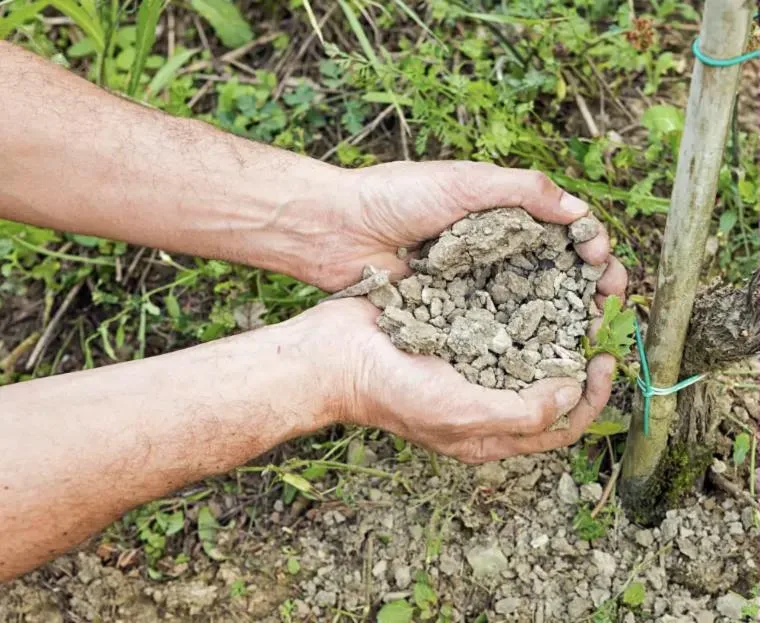
"L'uomo può effettivamente fare tanto, ma non potrà mai fare un vino di alta qualità con tutte le sofisticazioni, se tu non hai una materia prima di un certo tipo che verrà solo da un buon terreno."
"Man can really do a great deal, but he will never make a high-quality wine, with all the sophistication in the world, without raw material of a certain kind, and that only comes from good soil."
— Massimo Alois
What to eat with it, and how to find it
I asked what he would put next to a glass of Casavecchia for an American table. "A big steak," he said, "or lamb." The tannin needs fat to soften against.
Finding a bottle takes a little work. Alois's own distributor page lists partners in sixteen states and Washington, DC. The federal label register shows nine different US importers have filed approved Alois labels since 2011, most recently in March 2026, so the wine keeps arriving. It simply doesn't sit on the big websites.
So I asked Massimo where Americans actually find it, and his importers sent back these names in November 2026. I haven't called any of them, and a list like this goes stale quickly, so ring ahead before you drive over.
Shops, for a bottle to take home
- Radicle Wine and Gnarly Vines, Brooklyn, New York
- Community Wine & Spirits, Manhattan, New York
- The Italian Store, Arlington, Virginia
- France 44 Wines & Spirits and South Lyndale Liquors, Minneapolis
- Bernie's Wines & Liquors, Fargo, North Dakota
- Fujioka's Wine Times, Honolulu, and Bottleheads, Kailua, Hawaii
- Proof Wine & Spirits and Spinelli's Market, Denver
Restaurants, for a glass with dinner
- Sorellina, Hoboken, and Char Steakhouse, Raritan, New Jersey
- The Wine House, Fairfax, Virginia
- Mangata Raw and Wine Bar, Fargo, North Dakota
- A16, San Francisco, and La Jollita, La Jolla, San Diego
- Gocciolina, Durham, and Figulina, Raleigh, North Carolina
- Acanto and Spacca Napoli, Chicago
There's nothing on this list in Florida or Texas, and Massimo calls those two states his biggest regret. Nowhere near any of them? Ask a shop with a serious Italian shelf to order it.
Simone Argenio of Miriade & Partners introduced us, and Talita passed my number along. Grazie a entrambi.