
 Chris BerryFounder, Wine Underdogs — chasing the world’s overlooked grapes
If you find Riesling too fruity, too sweet or simply too much, the German white to try is Silvaner. The easiest bottle to find in an American shop comes from Rheinhessen; the one that makes the case for the grape is a dry bottle from Franken, the region around Würzburg on the river Main. You'll know a Franken wine by the bottle before you read the label: its best comes in a squat, round flask called the Bocksbeutel.
Silvaner is the quiet one. That is its whole case, and its whole problem.
What it tastes like
Riesling arrives talking. Silvaner waits to be asked. The flavours sit low and close: pear, quince, yellow plum, and something green and herbal underneath, closer to cut grass or gooseberry in a cool year. Wines of Germany, the national promotion body, lists flowers, melon, yellow plum and apple among its aromas.
What it has instead of perfume is texture. Romana Echensperger, writing for GuildSomm, describes it as plenty of structure without much weight, with gentler acidity than Riesling. She adds a number worth knowing before you buy: past about five or six grams of sugar per litre, Silvaner turns dull. It is a grape that wants to be dry.
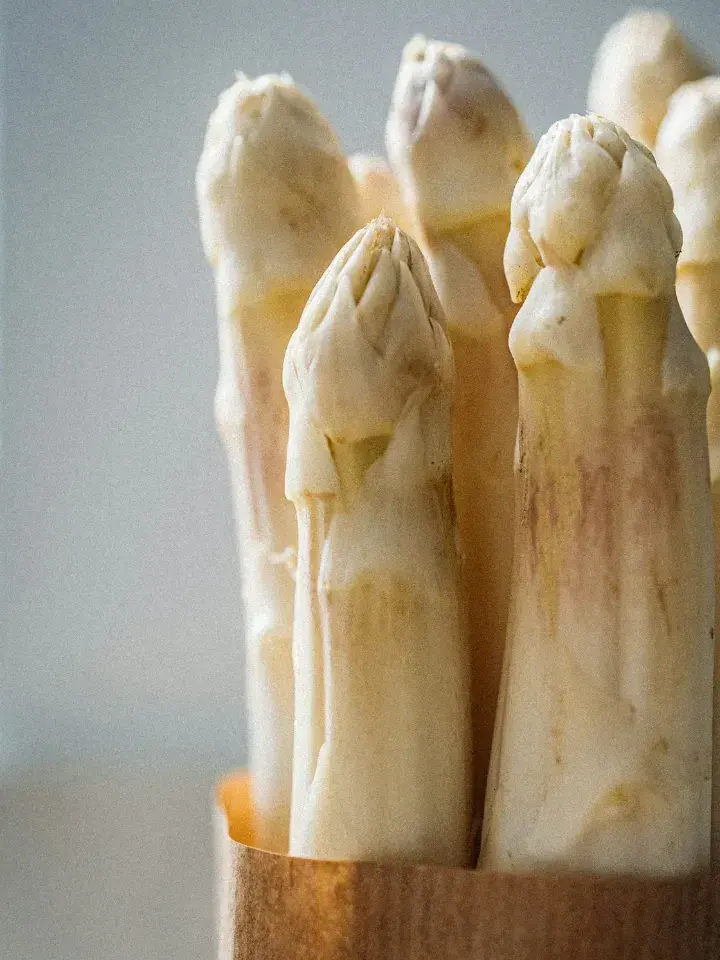
On the shell-limestone slopes of Franken it goes further, into wines that are powerful, earthy and built for the table. Asparagus is the classic match in Germany, and fish is the other one Wines of Germany names. A Silvaner will not fight a delicate plate the way a loud white can.
An Austrian grape that made its name in Germany
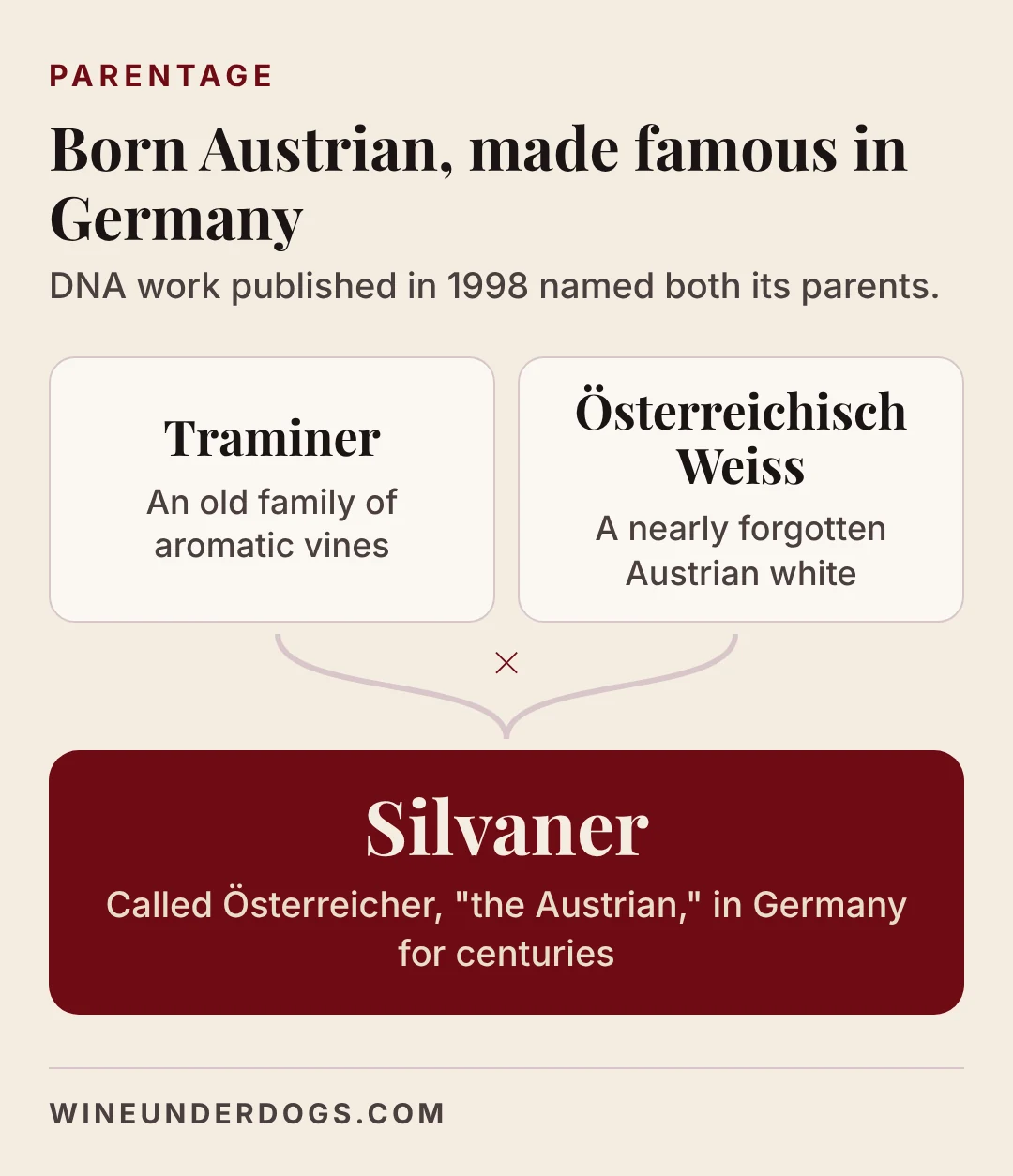
Silvaner's parents are Traminer and a nearly forgotten Austrian white, Österreichisch Weiss, a pairing established by DNA work published in 1998. For centuries Germans simply called it Österreicher, the Austrian.
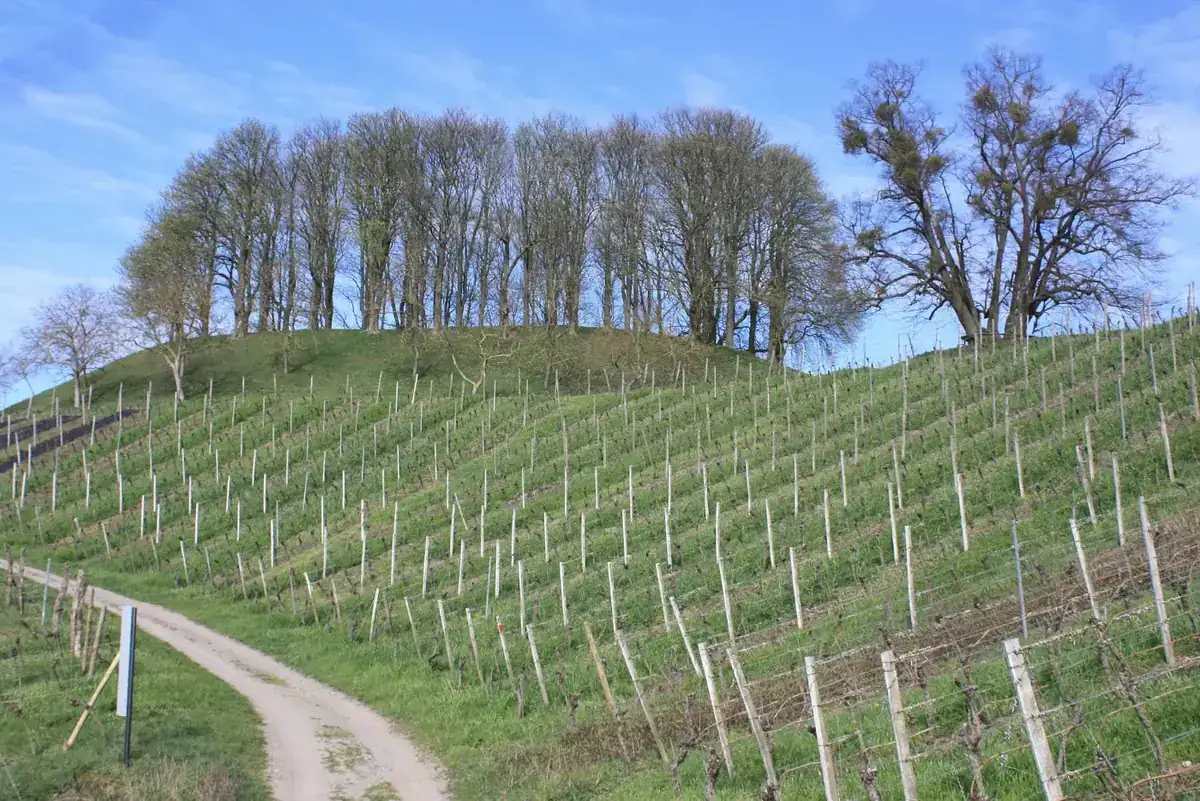
Its German story has a date. In April 1659, at Castell in Franken, the estate planted 25 Austrian cuttings at the foot of the castle hill to replace vines lost in the Thirty Years' War. Wines of Germany calls it the beginning of the grape's spread across the country. The Castell estate still makes Silvaner today.
The fall, and the blend that caused it
By the 1960s Silvaner covered close to a third of Germany's vineyards, and it was the country's most planted grape until 1968. Then two things happened at once. New crossings that ripened easily and cropped heavily took over much of its ground, and the Silvaner that stayed was too often farmed for volume and poured into cheap sweet blends like Liebfraumilch.
Here is the honest part. At high yields Silvaner really does taste of very little. Its reputation for blandness wasn't invented by snobs; it was earned, one tanker at a time.
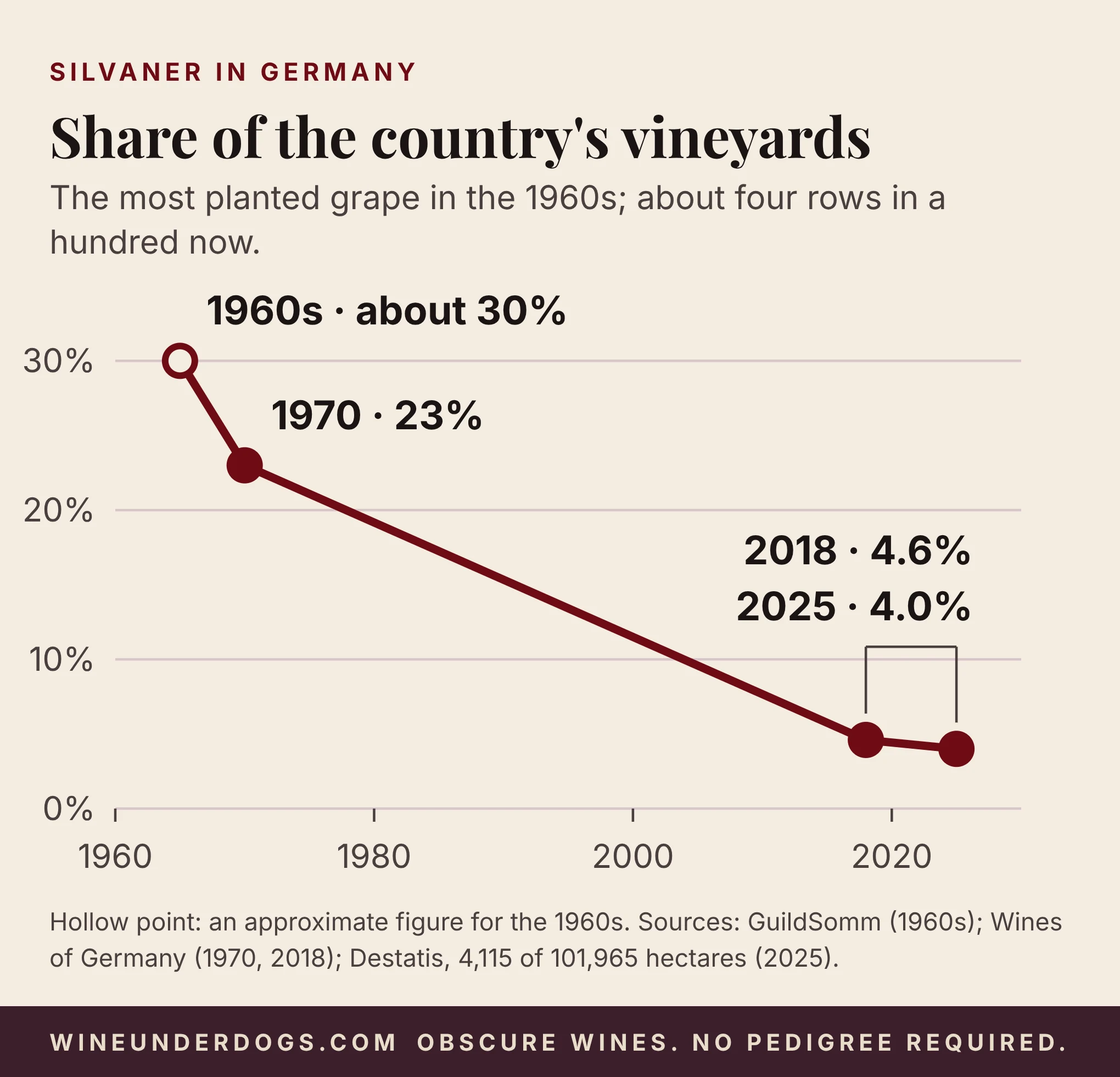
Today Germany grows 4,115 hectares of it, about 4 per cent of the country's vines, according to the federal statistics office's 2025 figures. Smaller, but the vines that survived the cull tend to be the ones a grower chose to keep.
Franken and the round bottle
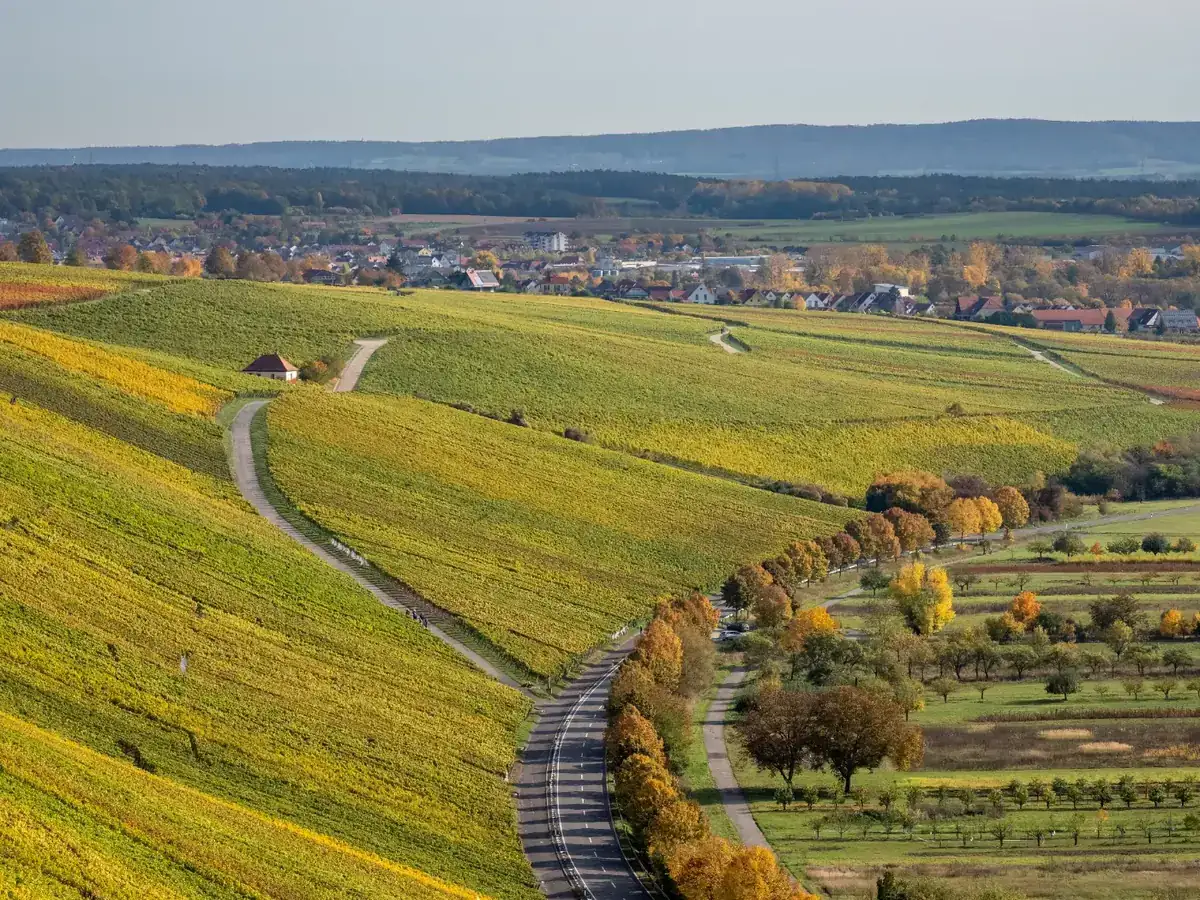
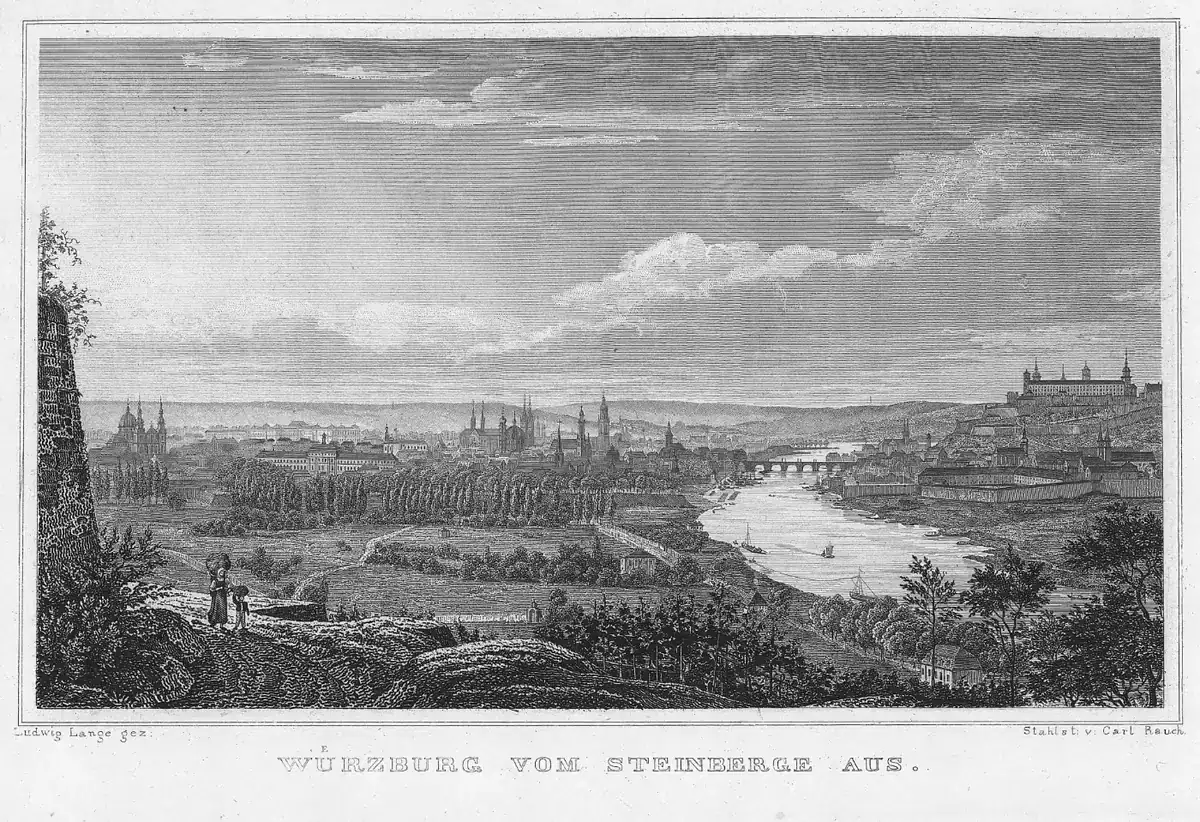
Rheinhessen grows the most Silvaner. Franken grows it most seriously: it fills roughly a quarter of the region's vineyards, and there it's the flagship rather than a filler. The famous slopes have names you'll see on labels, such as the Würzburger Stein above the city and the steep Escherndorfer Lump on a bend of the Main.
Then there's the bottle. The Bocksbeutel is flat, round and short, and it looks more like a canteen than a wine bottle. It isn't a gimmick either: European wine law reserves the shape for Franken, two small parts of Baden and a short list of places in Italy, Greece and Portugal. One of those is the Eisacktal in Alto Adige, which also makes Silvaner. The grape seems to follow the flask.
Beyond Germany
In Alsace it's spelled Sylvaner, and it has had a hard few decades there too. One vineyard has carried it into the top tier: the Zotzenberg grand cru at Mittelbergheim, the only grand cru in Alsace where Sylvaner is allowed. In the high Eisacktal of northern Italy it makes taut mountain whites from vineyards at 500 to 700 metres. In Switzerland, the same grape is often sold as Johannisberg.
| Where | Why look there |
|---|---|
| Franken | The most serious dry style, often in the Bocksbeutel |
| Rheinhessen | The most bottles to choose from |
| Alsace | Spelled Sylvaner; one grand cru, the Zotzenberg |
| Eisacktal, Italy | Taut whites from vines at 500 to 700 metres |
| Switzerland | Often sold as Johannisberg |
How to buy one
The grape rewards a little label reading, and almost all of it is on the front.
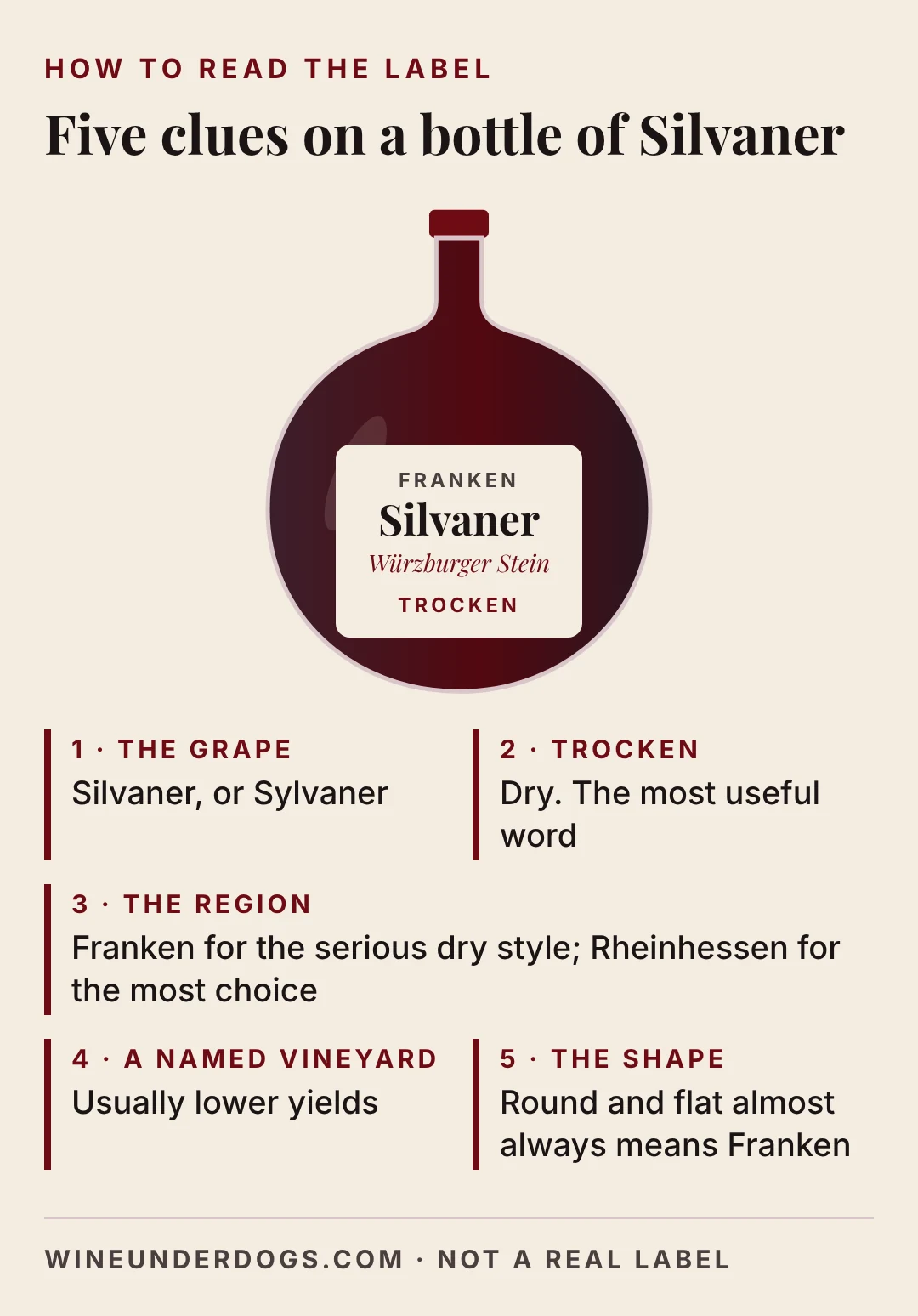
- Silvaner or Sylvaner, either spelling.
- Franken for the most serious dry style, or Rheinhessen for the most bottles to choose from.
- Trocken, which means dry. Given what sugar does to this grape, it is the most useful word on the label.
- The Bocksbeutel. A round, flat bottle on the German shelf is almost certainly from Franken.
- A village and vineyard name, such as Würzburger Stein or Escherndorfer Lump. A named site usually means lower yields and a wine with something to say.
Skip the cheapest bottle on the shelf. With most grapes the bargain is a smaller version of the real thing; with Silvaner it can be a different, emptier wine.
New to wine? Start here

Wine Match
Five guilty pleasures, yes or no. Ben finds the wine you’d actually like. You don’t need to know anything about wine. Ben certainly doesn’t.
Wine Underdogs is for readers of legal drinking age.
BenFive things. Yes or no. I'll do the rest.
Every wine fact here comes from the grape guides on Wine Underdogs. Ben has never opened a bottle, and neither does this game. For readers 21 and over.
Frequently asked questions
What is Silvaner?
A white wine grape, born in Austria and made famous in Germany, above all in Franken. Its official German name is Grüner Silvaner, and in Alsace it is spelled Sylvaner.
What does Silvaner taste like?
Quieter than Riesling. Expect pear, quince, yellow plum and something green and herbal, with more texture than perfume. Dry versions from Franken can taste earthy and almost stony.
Is Silvaner sweet?
It can be made either way, but the wines worth seeking are dry. Look for the word trocken on a German label.
What is the Bocksbeutel?
The flat, round-bellied flask Franken bottles its best wine in. European wine law reserves the shape for Franken and a short list of other places.
Are Silvaner and Sylvaner the same grape?
Yes. Silvaner is the German spelling and Sylvaner the French one, used in Alsace. In Switzerland the same grape is often sold as Johannisberg.
JOIN THE PACK
Whatever you drink now, there's an underdog you'd like more.
One overlooked wine at a time: what it tastes like, the famous one it can replace, and the catch. Free.