
 Chris BerryFounder, Wine Underdogs — chasing the world’s overlooked grapes
If you liked Liebfraumilch, or your parents did, the wine to try now is Silvaner: one of the grapes the law always allowed in the blend, now bottled on its own by estates in the same German region, Rheinhessen. Look for the word feinherb on the label if you want a little of the old softness.
Liebfraumilch itself is still made. It just stopped being the point.
A wine with a church for a name
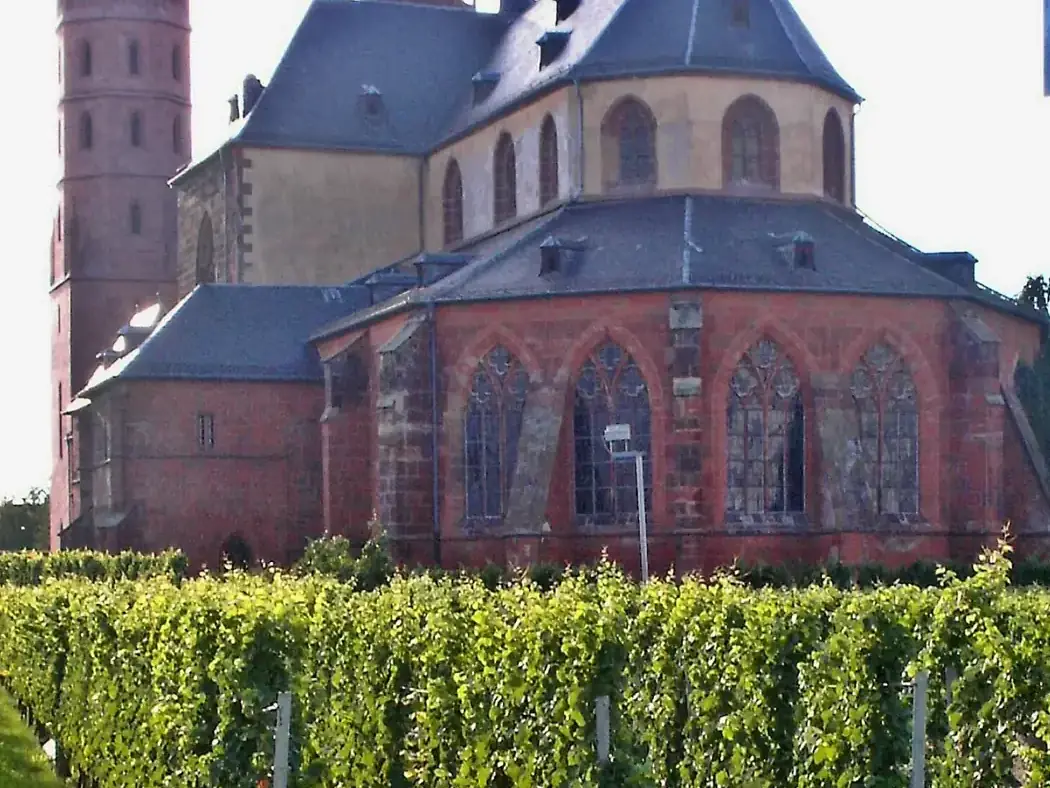
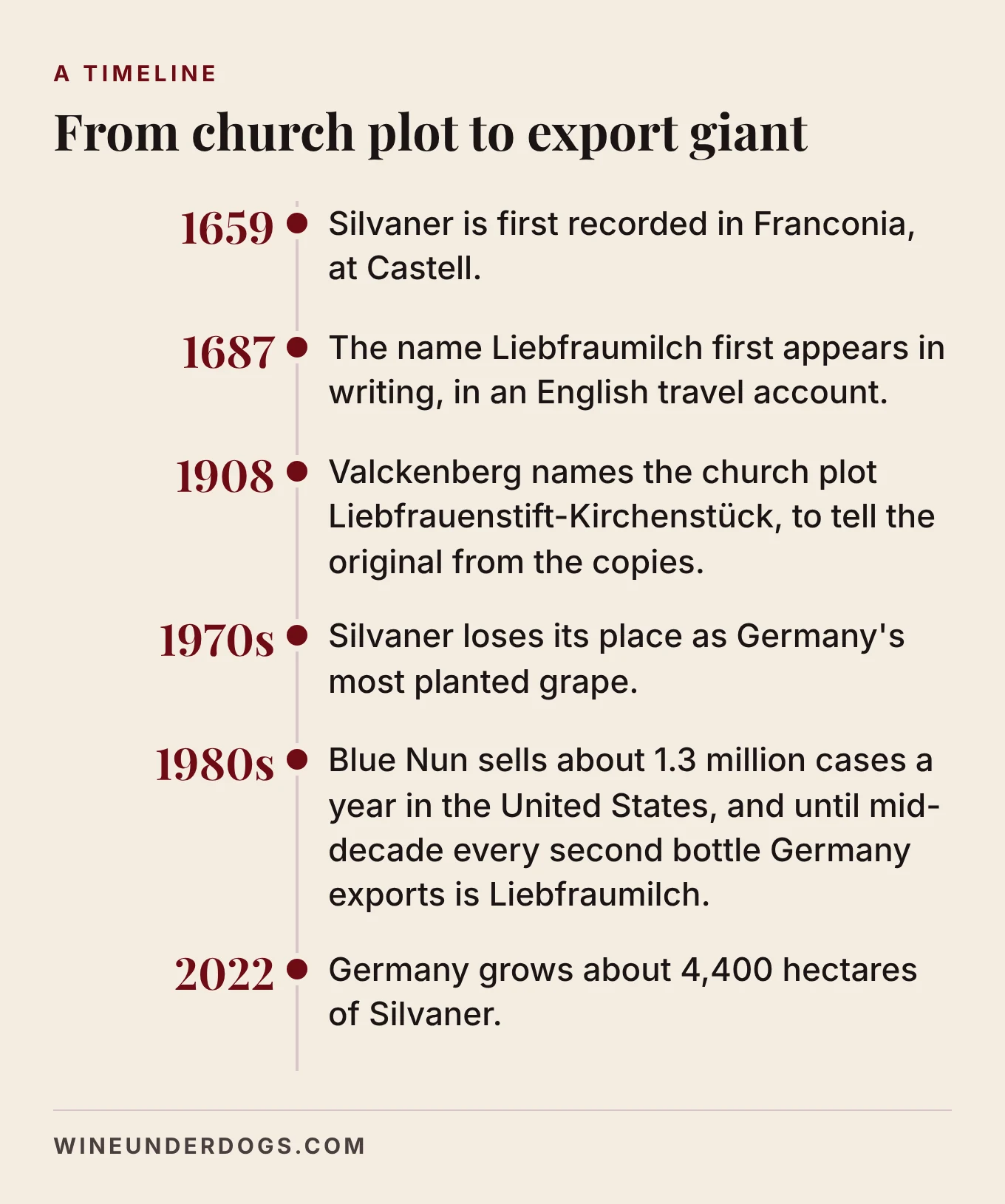
Liebfraumilch means, roughly, Our Lady's milk. The name belongs to a church before it belongs to a wine: the Liebfrauenkirche, the Church of Our Lady, in Worms on the Rhine, with vines planted right up to its walls.
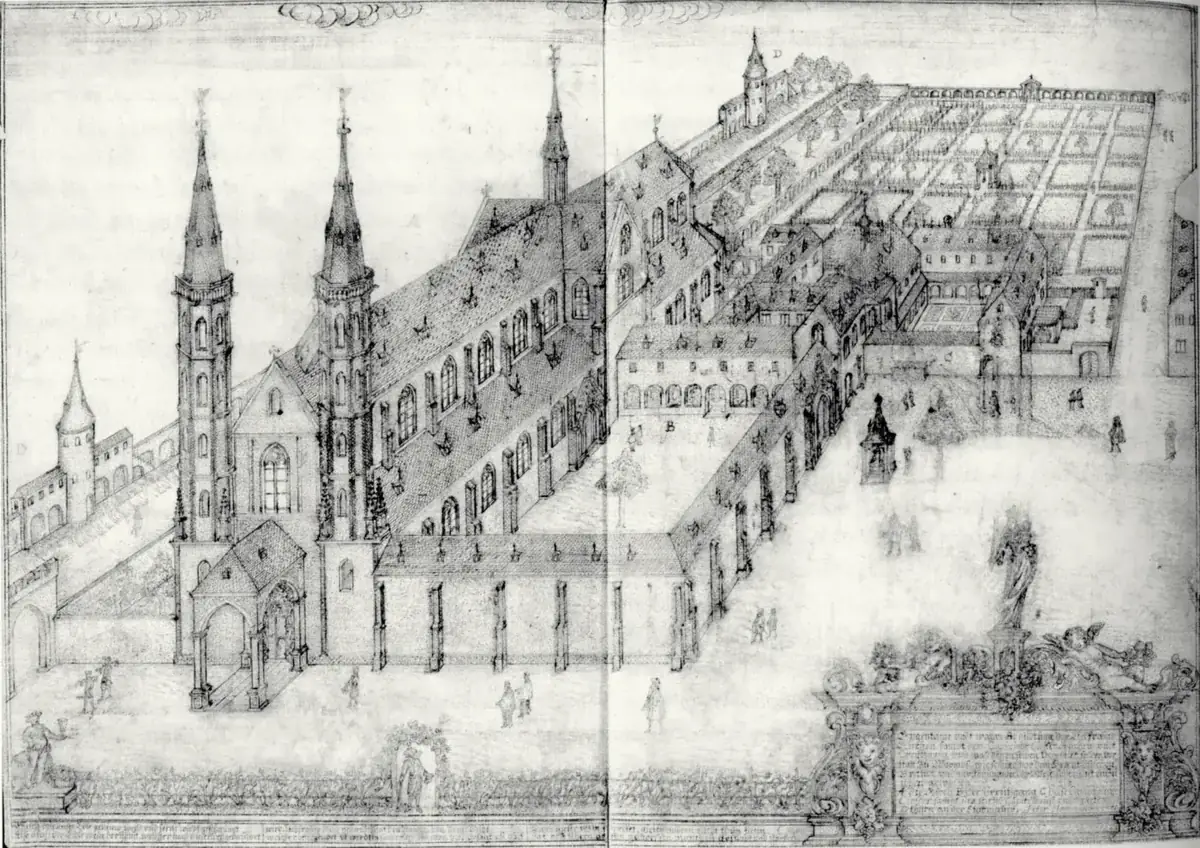
The legend, and it is told as legend, has pilgrims to a Madonna statue in the church receiving wine from the monastery and calling it as sweet as the Virgin's milk. The German Wine Institute dates the first written use of the name to an English travel account of 1687.

The trouble started when the name travelled faster than the wine. Nobody owned it, so it went the way a shared password goes once it is written on a sticky note: everywhere, and to no one's benefit. In 1908 Valckenberg, the Worms house that owns most of the church vineyard, gave the original plot a name of its own, Liebfrauenstift-Kirchenstück, so the real thing could be told from the imitations. According to the German Wine Institute, it covers 14.3 hectares around the church, is planted only with Riesling, and is shared by Valckenberg and four other estates from in and around Worms.
So the original Liebfraumilch vineyard now makes Riesling, and the law forbids any bottle labelled Liebfraumilch from naming it.
What the law says it is
Modern Liebfraumilch is defined in section 33 of Germany's wine regulation. It must be white Qualitätswein from one of four regions: Rheinhessen, Pfalz, Nahe or Rheingau. At least 70 per cent of it must come from Riesling, Silvaner, Müller-Thurgau or Kerner, and it has to taste like them. Its sugar must sit in the medium-sweet band of the EU labelling rules.
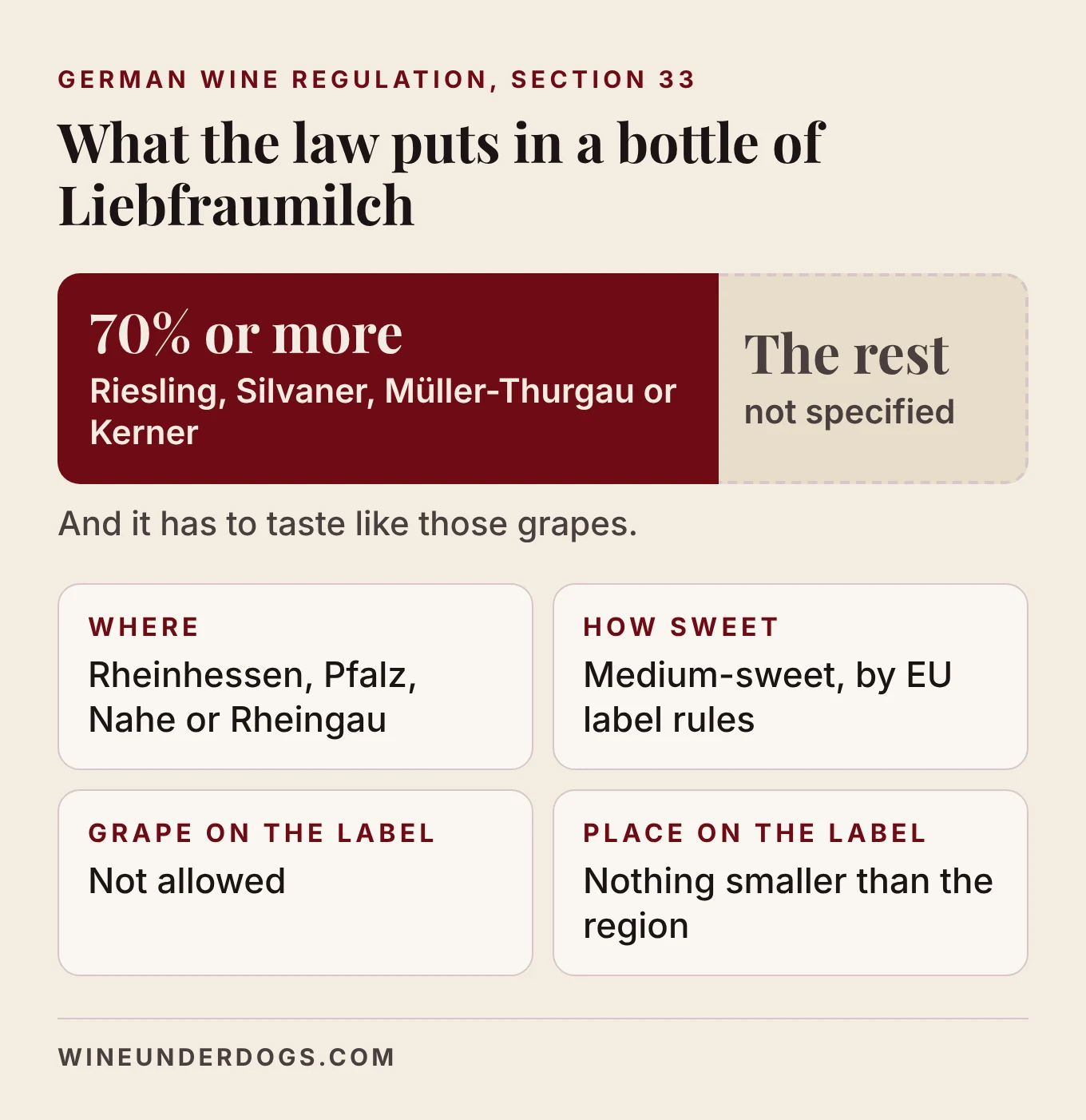
Then comes the clause that explains everything. The label may not name a grape, and it may not name any place smaller than the whole region. Liebfraumilch was built to be anonymous. It tells you it is German, white and gently sweet, and nothing else.
How it became half of Germany's exports
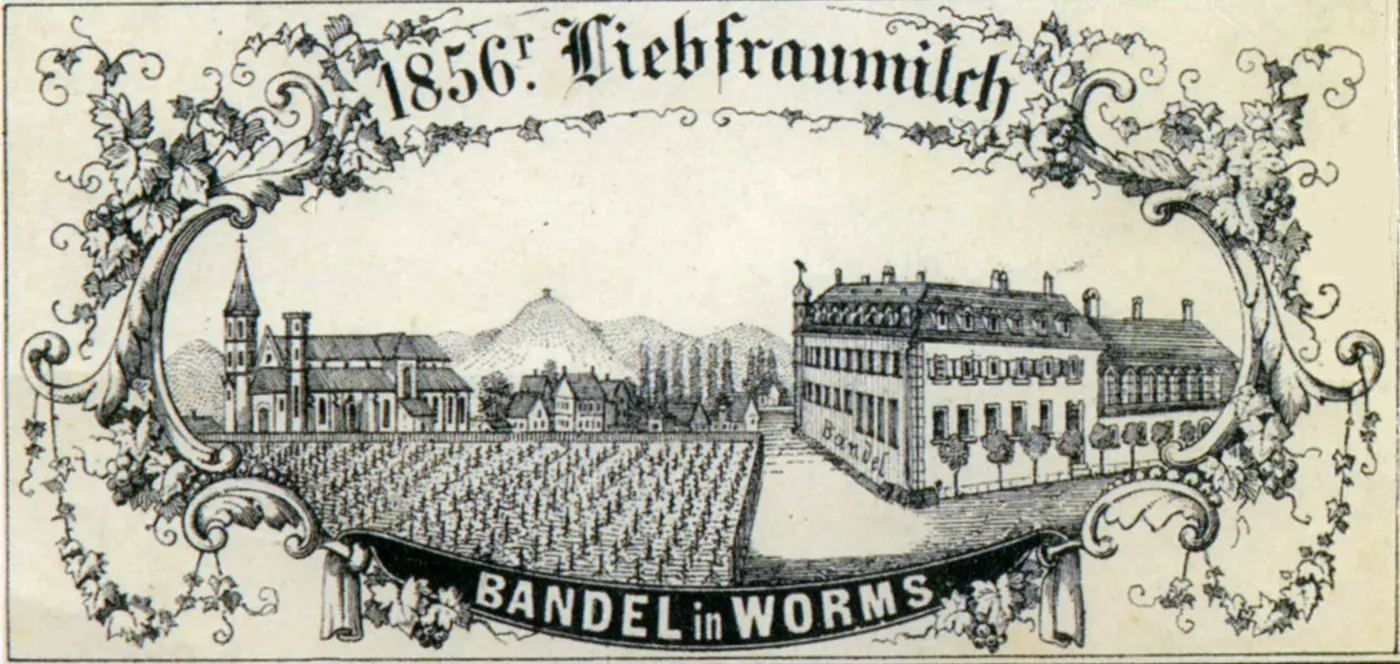
It did not start anonymous. In the nineteenth century a Liebfraumilch could carry its maker, its town and its year.
Anonymity scales. By one German business magazine's reckoning, until the mid-1980s every second bottle Germany exported was Liebfraumilch (WirtschaftsWoche, 2017).
The brands did the rest. Blue Nun, built by the Sichel family firm, sold about 1.3 million cases a year in the United States at its 1980s peak, according to Jancis Robinson's profile of Peter Sichel, who ran it. He once tested a straight Riesling against a softer blend of Müller-Thurgau, Silvaner and a little Gewürztraminer, and drinkers preferred the blend. That choice made a fortune, and it shaped what a great many Americans thought German wine tasted like.
Why it disappeared
Robinson's account is that the success invited imitators, and the shelf filled with bland, sugary, interchangeable bottles. Drinkers moved on, toward drier whites and toward red. Blue Nun later dropped the Liebfraumilch name altogether.
What stayed behind was the reputation. A Geisenheim wine-business researcher, Simone Loose, told WirtschaftsWoche that for many foreign buyers the word itself now provokes a reaction. Germany's best estates spent the following decades explaining that the bottle in your parents' fridge was not what they made.
This week's Ben and Sadie short has Ben under a sheet, introducing himself as the Ghost of Wines Past, and Liebfraumilch is the wine he chose to haunt. It is a fair choice. Famous everywhere, and then, quite quickly, nowhere.
The grape that walked out of the blend
Here is where the underdog comes in. Silvaner was in the Liebfraumilch recipe from the start, and it is an old grape with a better story than the bottle that hid it. DNA work traces it to a cross of Traminer and an old Austrian white, Österreichisch Weiss. It is first recorded in Franconia, at Castell, in 1659, and the German Wine Institute says it was Germany's most planted grape until the 1970s.
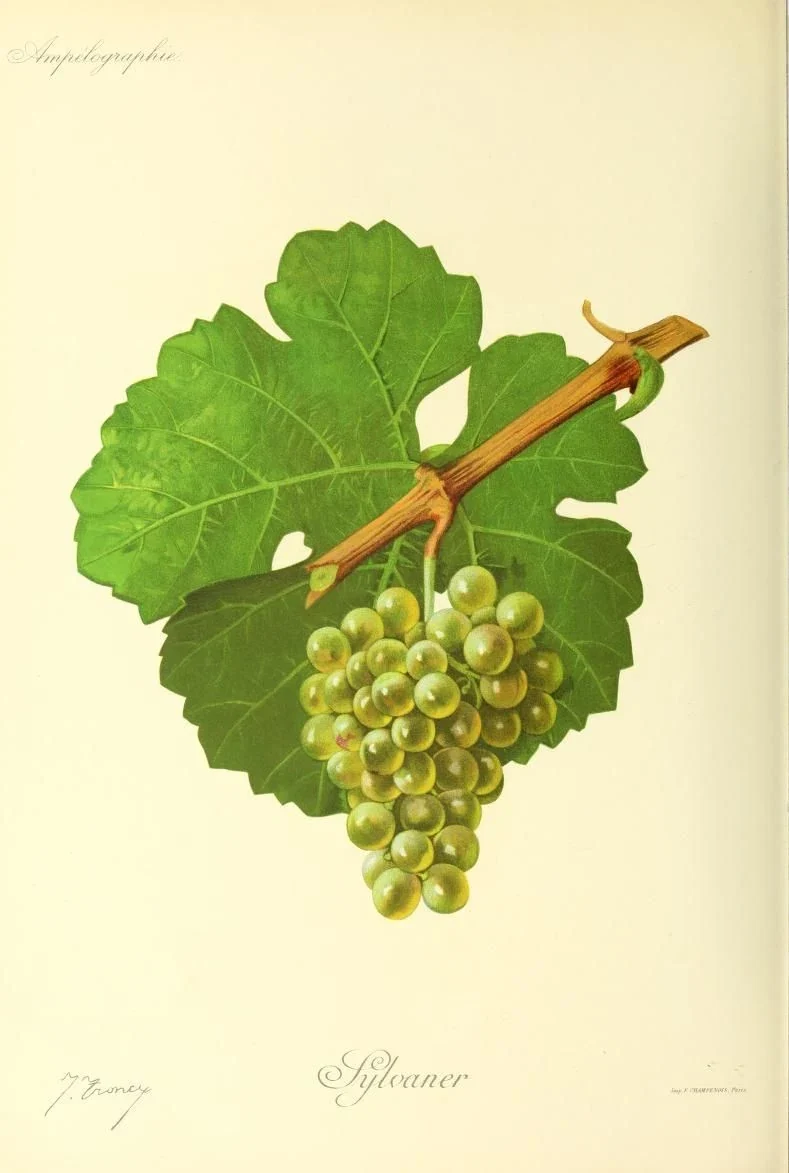
Then it lost the top spot, and spent the Liebfraumilch years as a blending ingredient, credited about as often as the person who fixed the office printer. Today Germany grows about 4,400 hectares of it (2022), roughly 4 per cent of the country's vines. Rheinhessen has the most, about 1,930 hectares. Franconia has the highest share: about a quarter of the region's vineyards.
What it tastes like, in the institute's description: light and quietly fragrant, with mild acidity, herbs, gooseberry and sometimes fresh hay. On heavier soils it fills out toward ripe pear and, oddly, artichoke. It is a food wine more than a show wine, and the institute's own pairings are asparagus and fish.
Which Silvaner to buy
There are two ways in, and they answer different readers. First, what changes when you swap the brand for the grape:
| Liebfraumilch | Estate Silvaner | |
|---|---|---|
| The grape | At least 70% from four, unnamed | One grape, named on the label |
| The place | A whole region, nothing smaller | Often a village or a vineyard |
| The sweetness | Medium-sweet, by law | The producer's call |
If you remember Liebfraumilch fondly, start with a feinherb Silvaner from Rheinhessen. Feinherb means off-dry, though the law does not define it, so one producer's feinherb can be noticeably sweeter than another's. It keeps a little of the softness and gives you a grape and an estate instead of a brand.
If you want to see what the grape can do, go dry and go to Franken, where Silvaner is the regional pride and is usually sold in the squat, round Bocksbeutel bottle. Hans Wirsching, from Iphofen, is one you will find in US shops.
The honest part: I have not yet tasted the Strub bottle in the box above, so there is no score here and I am not going to pretend to one. I picked it because it is the closest thing in a US shop to what this piece argues for, a single-grape Silvaner from Liebfraumilch's own region, and because it was in stock when I opened the page on 30 October 2026.
What to skip
Skip anything sold on the word Liebfraumilch alone if you are hoping to rediscover something. The law guarantees a region, a sweetness band and four possible grapes, and it forbids the label from telling you which grape you are drinking. The wine worth chasing was always one of the ingredients.
New to wine? Start here

Wine Match
Five guilty pleasures, yes or no. Ben finds the wine you’d actually like. You don’t need to know anything about wine. Ben certainly doesn’t.
Wine Underdogs is for readers of legal drinking age.
BenFive things. Yes or no. I'll do the rest.
Every wine fact here comes from the grape guides on Wine Underdogs. Ben has never opened a bottle, and neither does this game. For readers 21 and over.
Frequently asked questions
What is Liebfraumilch?
A German white wine with a legal definition: white Qualitätswein from Rheinhessen, Pfalz, Nahe or Rheingau, at least 70 per cent Riesling, Silvaner, Müller-Thurgau or Kerner, and medium-sweet. The label may not name a grape or any place smaller than the region.
What does Liebfraumilch mean?
Roughly 'Our Lady's milk'. The name comes from the vineyard around the Liebfrauenkirche, the Church of Our Lady, in Worms.
Is Blue Nun a Liebfraumilch?
It was. In the 1980s Blue Nun sold about 1.3 million cases a year in the United States as a Liebfraumilch. The brand later dropped the designation.
What should I drink instead of Liebfraumilch?
Silvaner, one of the grapes the law allows in the blend. A feinherb (off-dry) Silvaner from Rheinhessen keeps a little of the softness, and a dry one from Franken shows what the grape does on its own.
JOIN THE PACK
Whatever you drink now, there's an underdog you'd like more.
One overlooked wine at a time: what it tastes like, the famous one it can replace, and the catch. Free.