
 Chris BerryFounder, Wine Underdogs — chasing the world’s overlooked grapes
If you try one Turkish red, make it a bottle that blends Öküzgözü and Boğazkere. Öküzgözü is the juicy one and Boğazkere is the one that grips, and together they make the closest thing Turkey has to a signature red.
The names look harder than they are. Öküzgözü is said ur-KEWZ-gur-zew, and it means ox eye, for its big, dark berries. Boğazkere is said boh-AHZ-keh-reh. The ğ is silent and only stretches the o in front of it.
Öküzgözü, the juicy one
Öküzgözü comes from the high vineyards of Elazığ in Eastern Anatolia, some of them at around 1,000 meters. It's now Turkey's most widely planted grape for red wine, according to Jancis Robinson, and its berries are big, oval and fleshy.
That shows in the glass. On its own, Öküzgözü makes a light-colored red of medium alcohol, with fresh acidity, soft tannin and plenty of fruit. If you drink cru Beaujolais or a light, cherry-led Grenache, you already know the shape of it.
Around Elazığ, though, most Öküzgözü is eaten rather than drunk. The juice is simmered for hours into pekmez, a thick grape molasses, and the molasses goes into orcik, a walnut sweet people eat through the cold months.
Boğazkere, the one that grips
Boğazkere grows to the southeast, in Diyarbakır near the Tigris. Its name translates roughly as throat burner, and three separate sources I read give the same reason: tannin. The berries are small, the skins are thick, and it ripens late, which needs a long, warm season to get right.
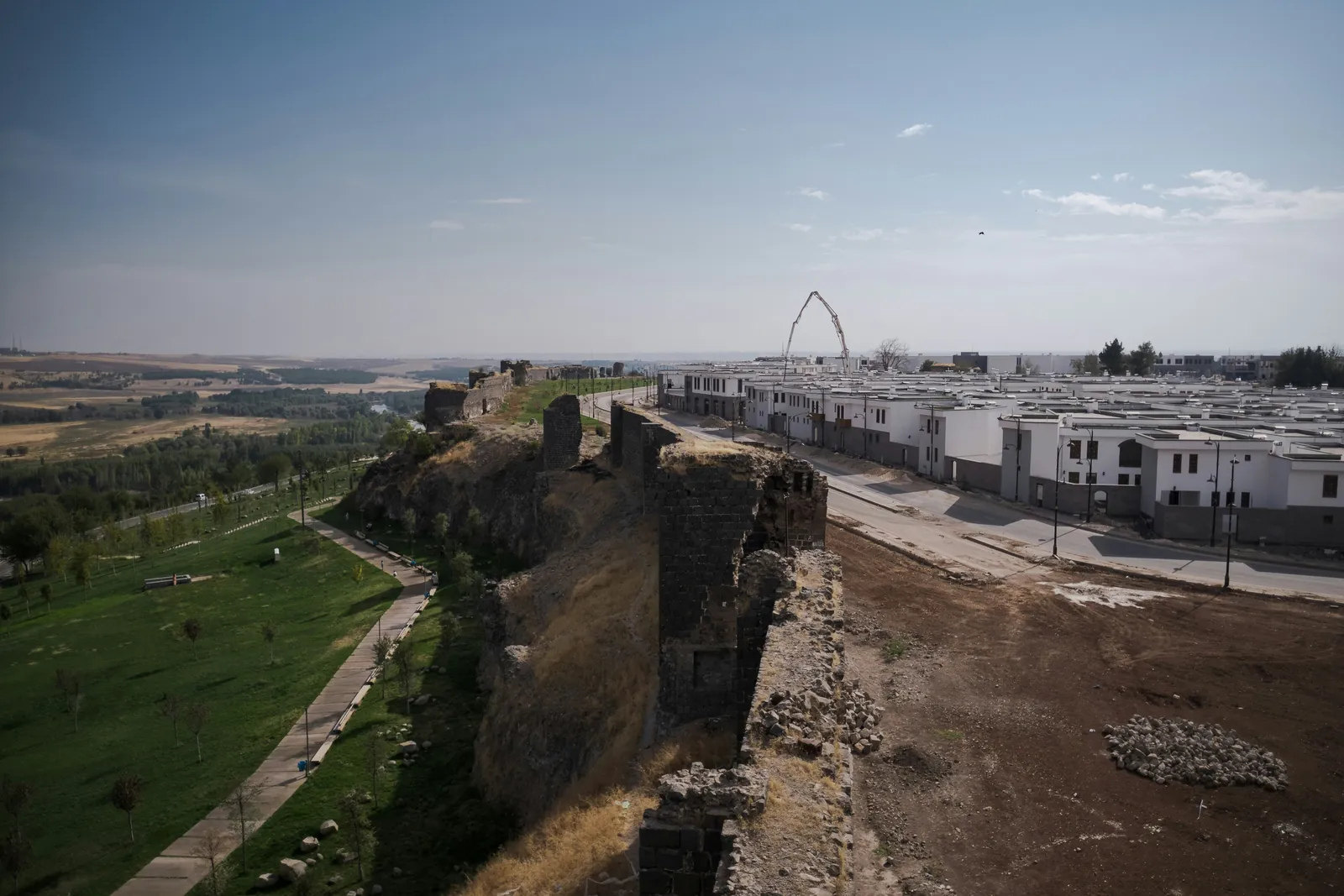
Young, it's tannic and firm, with darker fruit, a hint of tobacco and leather, and very little interest in being liked. Given time in bottle, it settles, and good examples are said to keep improving for a decade or more. If Tannat or a firm young Cabernet is your kind of wine, Boğazkere on its own is worth seeking out.
Why they belong in one bottle
Each grape fills the other's gap. Öküzgözü has the fruit and the freshness and not much structure. Boğazkere has structure to spare and not much charm. Blend them and you get a red that's generous on the first sip and still holding on at the finish, which is why the blend is Eastern Anatolia's classic red.
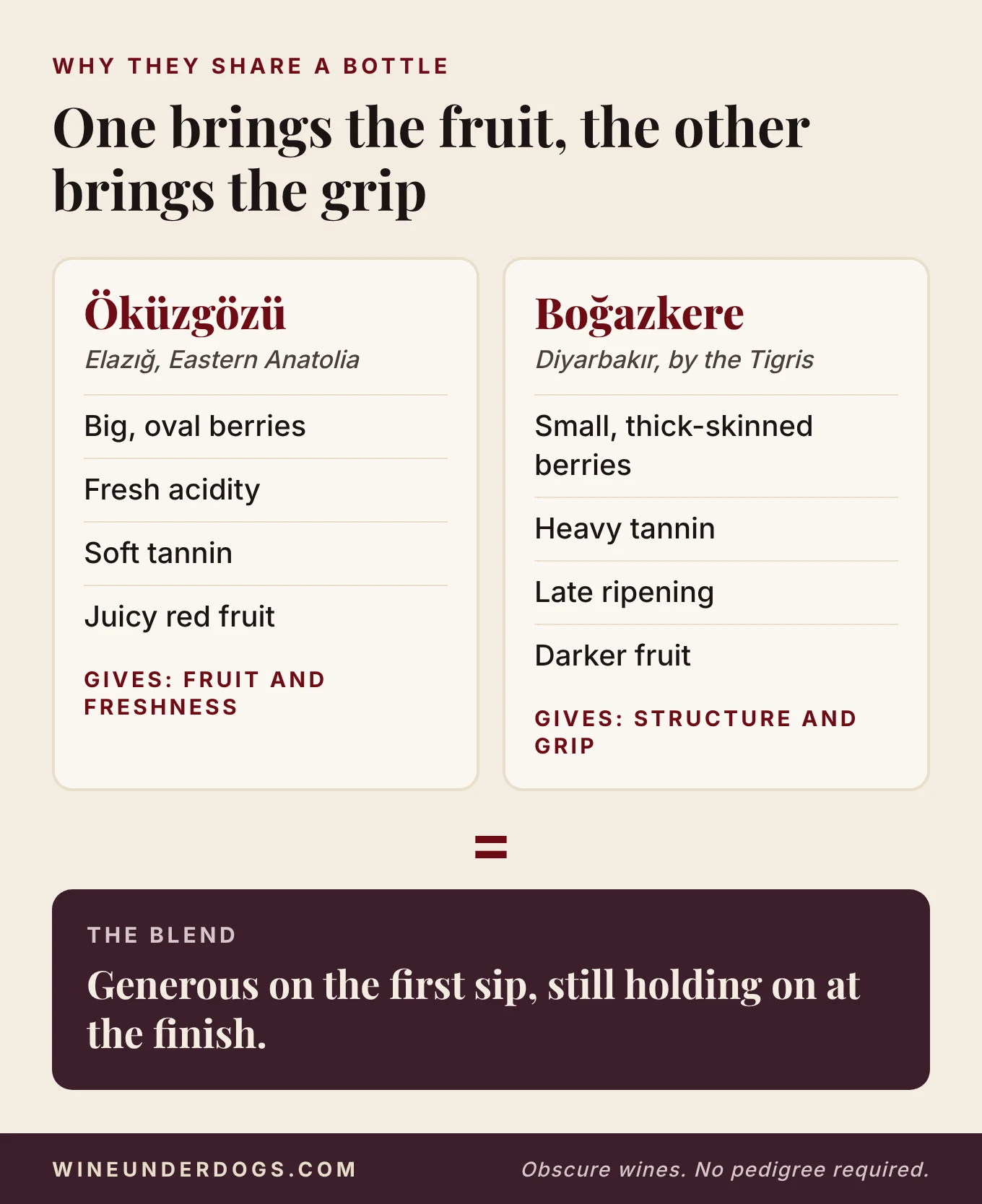
| Öküzgözü | Boğazkere | |
|---|---|---|
| Name means | Ox eye | Throat burner, roughly |
| Home | Elazığ | Diyarbakır |
| Berries | Big, oval, fleshy | Small, thick-skinned |
| Tannin | Soft | Heavy |
| Planted | About 1,600 hectares (2016) | About 1,100 hectares (2010) |
| Tastes of | Juicy red fruit | Darker fruit, tobacco, leather |
| Try it if you like | Cru Beaujolais, light Grenache | Tannat, firm young Cabernet |
Plantings come from the wein.plus wine lexicon, which cites Kym Anderson's vineyard statistics for Öküzgözü and the reference book Wine Grapes for Boğazkere. Different years, so treat them as a rough comparison.
The bottle I'd start with is Kavaklıdere's Selection, a blend of the two. The other name to know is Buzbağ, Kayra's Öküzgözü-Boğazkere blend, and it has the better story.
Buzbağ is said to take its name from the Buzluk cave near the old fortress town of Harput, and the cave is a small scientific puzzle of its own: ice forms there in summer and not in winter. Turkey's culture ministry puts that down to warm air circulating through it in winter. Cave specialists describe it as a cold trap instead. Cold winter air is heavy, so it sinks into the cave and stays, keeping the rock cold all year. Ice can only build once spring meltwater trickles in, and in winter the water outside is frozen too, so nothing reaches the cave to freeze.
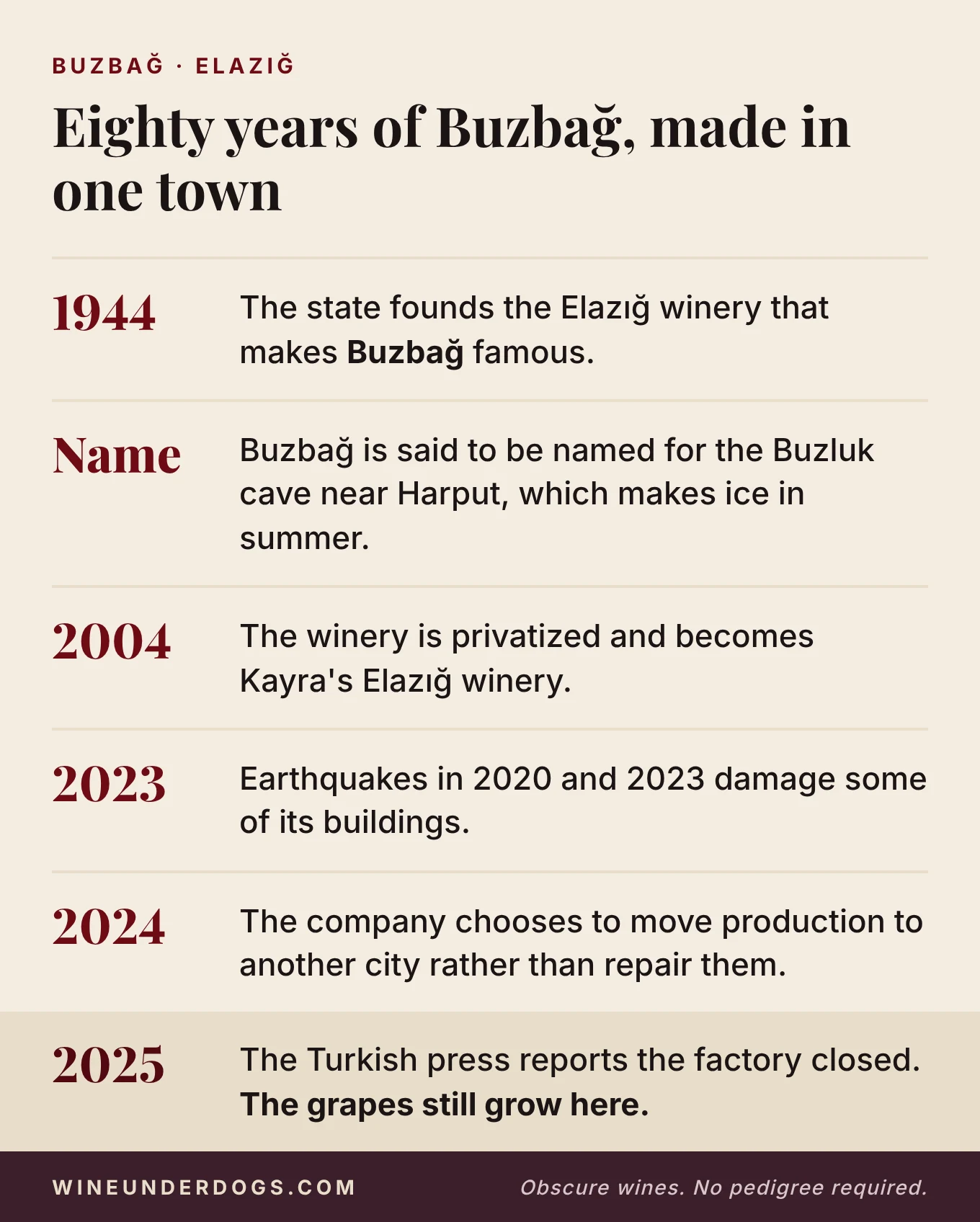
The winery behind Buzbağ has a story too. Wine has been made in that building in Elazığ since 1942, and in 1944 the state founded the winery there that made Buzbağ famous. It was privatized in 2004 and became Kayra's Elazığ winery. Earthquakes in January 2020 and February 2023 damaged some of its buildings, and the company chose to move production to another city rather than repair them. In December 2025 the Turkish press reported the factory closed.
The road the first vines took
The ground these two grow on matters more to wine's history than either grape does. In 2023, more than a hundred researchers published what was then the largest genetic study of grapevines, in Science, built on more than 3,000 vines. They found that grapes were domesticated twice, at about the same time, roughly 11,000 years ago: once in Western Asia and once in the Caucasus, Anatolia's neighbor to the northeast.
The Caucasus line mostly stayed on either side of its mountains. The Western Asian line traveled, and the early domesticated vines reached Europe by moving northwest through Anatolia into the Balkans, alongside farming itself.
That's a finding about where vines traveled, not a claim that Turkey invented wine, and the study doesn't trace Öküzgözü or Boğazkere themselves. But Europe's first domesticated vines came across the same country that can no longer put a wine label in a shop window.
Why you've never heard of them
I can't tell you what either grape tastes like from my own glass. I haven't been able to buy a bottle in Florida, and that's the most honest thing in this article.
Part of the reason is scale. Turkey has the fifth largest vineyard area in the world, according to Jancis Robinson, but only about 2% of those vines make wine. Its most planted grape, Sultaniye, is grown mostly for drying.
The other part is the law. Turkey banned alcohol advertising, promotion and sponsorship in 2013. In June 2026 Parliament went further. Alcohol brand names, logos and packaging images can no longer be shown inside or outside shops, bars and restaurants, and licensed sellers have until June 20, 2027, to take them down. A Turkish winemaker can barely tell other Turks about wine, let alone the rest of us.
So the grapes aren't obscure because they're dull. They're obscure because almost nobody is allowed to talk about them, which is about the best possible reason to go looking.
How to find a bottle
Wine.com is no help this time, and it used to be. It lists 22 Öküzgözü wines, from Kayra, Kavaklıdere, Turasan and Diren, and in November 2026 every one shows sold out, the newest a 2016. The bottles reached America once and stopped coming. Ask a wine shop that orders from importers to find Kavaklıdere's Selection Öküzgözü-Boğazkere by name. If they can't, ask for any Öküzgözü-Boğazkere blend, and say both names out loud. You'll be the only person who has asked them all year, and they'll remember you.
New to wine? Start here

Wine Match
Five guilty pleasures, yes or no. Ben finds the wine you’d actually like. You don’t need to know anything about wine. Ben certainly doesn’t.
Wine Underdogs is for readers of legal drinking age.
BenFive things. Yes or no. I'll do the rest.
Every wine fact here comes from the grape guides on Wine Underdogs. Ben has never opened a bottle, and neither does this game. For readers 21 and over.
Frequently asked questions
How do you pronounce Öküzgözü?
ur-KEWZ-gur-zew. The ö sounds like the vowel in her, said with rounded lips, and the ü is an ee said with rounded lips. It means ox eye, for the grape's big, dark berries.
How do you pronounce Boğazkere?
boh-AHZ-keh-reh. The ğ is silent and only stretches the o before it.
What does Boğazkere mean?
Roughly throat burner, for its heavy tannin. It's a thick-skinned, late-ripening grape from Diyarbakır, near the Tigris, and good examples are said to keep improving for a decade or more.
Why are Öküzgözü and Boğazkere blended?
Each covers the other's gap. Öküzgözü is fruity, fresh and soft, and Boğazkere is tannic and firm. Together they make the closest thing Turkey has to a signature red.
Why is Turkish wine hard to find in the US?
Very little of Turkey's grape crop becomes wine, about 2% by Jancis Robinson's count, and alcohol advertising has been banned in Turkey since 2013. A 2026 law extended that ban to brand names and logos in shops.
JOIN THE PACK
Whatever you drink now, there's an underdog you'd like more.
One overlooked wine at a time: what it tastes like, the famous one it can replace, and the catch. Free.