 Chris BerryFounder, Wine Underdogs — chasing the world’s overlooked grapes
You can buy a white with real body and still walk away from Chardonnay. Bical is how.
Bical is pronounced bee-KAL.
This is Bairrada's answer to the textured white: high acid, peach-and-apple fruit, a stony spine, and enough weight to fill the space an oaked Chardonnay usually occupies at the table. It ages, too, which most whites at its price cannot claim.
What it tastes like
Start with the fruit: peach and apricot, green apple, a squeeze of citrus. Underneath sits a wet-stone minerality that keeps the whole thing from turning soft. The acidity is the headline. Bical holds its line even in warm vintages, which is exactly why Bairrada growers have leaned on it for sparkling wine since the 1800s.
In a still wine, that acid gets a counterweight. Time on the lees, sometimes a pass through wood, gives Bical a broader, rounder texture. It is not a lean, darting white like Muscadet, and it is not a fat one either. It lands in the middle, with the kind of mid-palate weight people usually go to Chardonnay to find.
Then there is the trick most whites cannot do: it evolves. Give a good bottle a few years and the fruit turns honeyed, with toast and lanolin creeping in. Sommeliers reach for aged Riesling as the comparison, and it holds up.
Bairrada, and a grape named for fly droppings
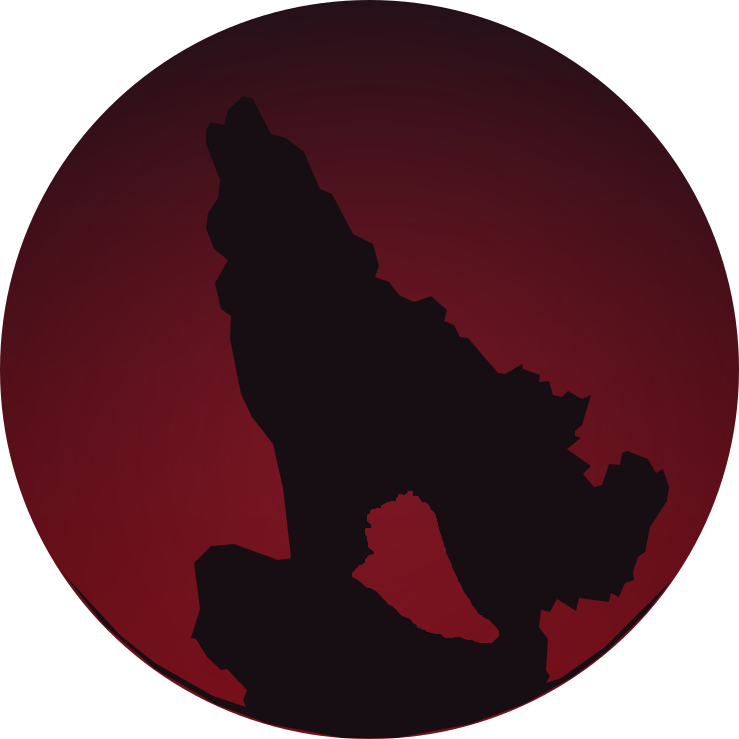
Bical's home is Bairrada, the cool, Atlantic-influenced strip of central Portugal near the coast. It shows up in neighboring Dão too, where locals call it Borrado das Moscas, which translates, without ceremony, to "fly droppings." The name points at the small brown speckles that dot the skins when the grape ripens. Not flattering. Portuguese wine naming rarely is.
So why has almost no one outside Portugal heard of it? Two reasons. Bical ripens early and disappears into blends, most often paired with Arinto for the region's sparkling espumante, so its name never reaches the label. And Bairrada itself is better known abroad for Baga, its brooding red. The white grape has spent a century as a supporting player in someone else's story. It deserves the lead.
Bottles to look for
The names to know start with Pato. Luis Pato and his daughter Filipa Pato are Bairrada's most recognizable growers, and both take Bical seriously as a still wine rather than only sparkling filler. Campolargo, Kompassus, and Quinta dos Roques are others working with the grape across Bairrada and Dão. Look for single-varietal still Bical, or a Bairrada branco where it leads the blend.
Here is the honest part. Single-varietal still Bical is genuinely hard to find in the US. Most of the crop goes into sparkling blends or into regional whites that never say "Bical" on the front. There is no settled critical score to point you toward one bottle over another, because the grape has never had the attention that generates one. You are buying on the strength of the producer and the region, not on a number. For a grape this good, that is an opportunity, not a warning.
Where to buy
Disclosure: some links here are affiliate links — if you buy through them I may earn a small commission, at no extra cost to you. Learn more You must be 21+ to buy alcohol in the United States.Wine.com is the seller: they take the payment, ship the bottle and handle returns, and what's available depends on the state you pick at checkout. I never see your order.
US availability is thin but real, and it is growing as Bairrada's still whites find an audience. Search by the grape name or by producer, since the sparkling bottles will surface alongside the still ones.
If your local shop has a serious Portuguese section, ask for a Bairrada branco and check the back label for Bical. A good wine importer specializing in Portugal is your other reliable route.
— Chris Berry
If you're switching from a famous grape
If you drink Chardonnay for its texture, its weight, its ability to take on a rich dish, Bical does that work with more freshness and less tropical fatigue. Swap the butter and pineapple for peach, stone, and a clean acid finish, and you get a white that pairs with the same food but does not go flabby by the second glass. It also ages, which most Chardonnay under twenty dollars will not.
See Wines Like Chardonnay for the full lineup, or jump straight to Order This Instead.
Part of Lesser-Known Wines: 17 Obscure Grapes Worth Switching To — the full underdog-swap guide.
Frequently asked questions
What is Bical?
Bical is a white wine grape grown mainly in Portugal's Bairrada region, and in Dão under the name Borrado das Moscas. It makes crisp, textured still whites and is a backbone of Bairrada's traditional-method sparkling wine.
What does Bical taste like?
Peach, apricot, citrus, and green apple over a mineral, stony core, with high acidity. With a few years in bottle it turns honeyed and toasty, closer to aged Riesling.
Is Bical like any famous grape?
It swaps for Chardonnay. Bical gives you the same mid-weight texture and lees-driven richness, but with sharper acidity and a savory edge instead of butter and tropical fruit.
How do you pronounce Bical?
Roughly bee-KAL.
The Underdog 101 card
Save the Bical card
Card 61 of 101 — how to say it, what it tastes like, where to start, and the famous wine it stands in for. Save it, or send it to the friend who keeps ordering the same three bottles.
Every number on the card is pulled from this guide — the card and the page can never disagree. For readers 21 and over.
FREE DOWNLOAD
Get the Underdog Starter List
10 lesser-known bottles under $25 worth chasing — plus the weekly underdog read. No snobbery, just good wine.