
 Chris BerryFounder, Wine Underdogs — chasing the world’s overlooked grapes
Sagrantino is pronounced sah-grahn-TEE-noh.
Thieves took about 30,000 bottles of Tuscany's most famous reds from Marchesi Antinori this month, and they didn't touch a single underdog. That's the lesson for anyone who drinks wine rather than trades it. The bottles worth stealing are the bottles priced for collectors. The bottles worth opening on a Tuesday are the ones a crew with two trucks would drive straight past, and for this style of wine the best of them comes from one region east, in Umbria.
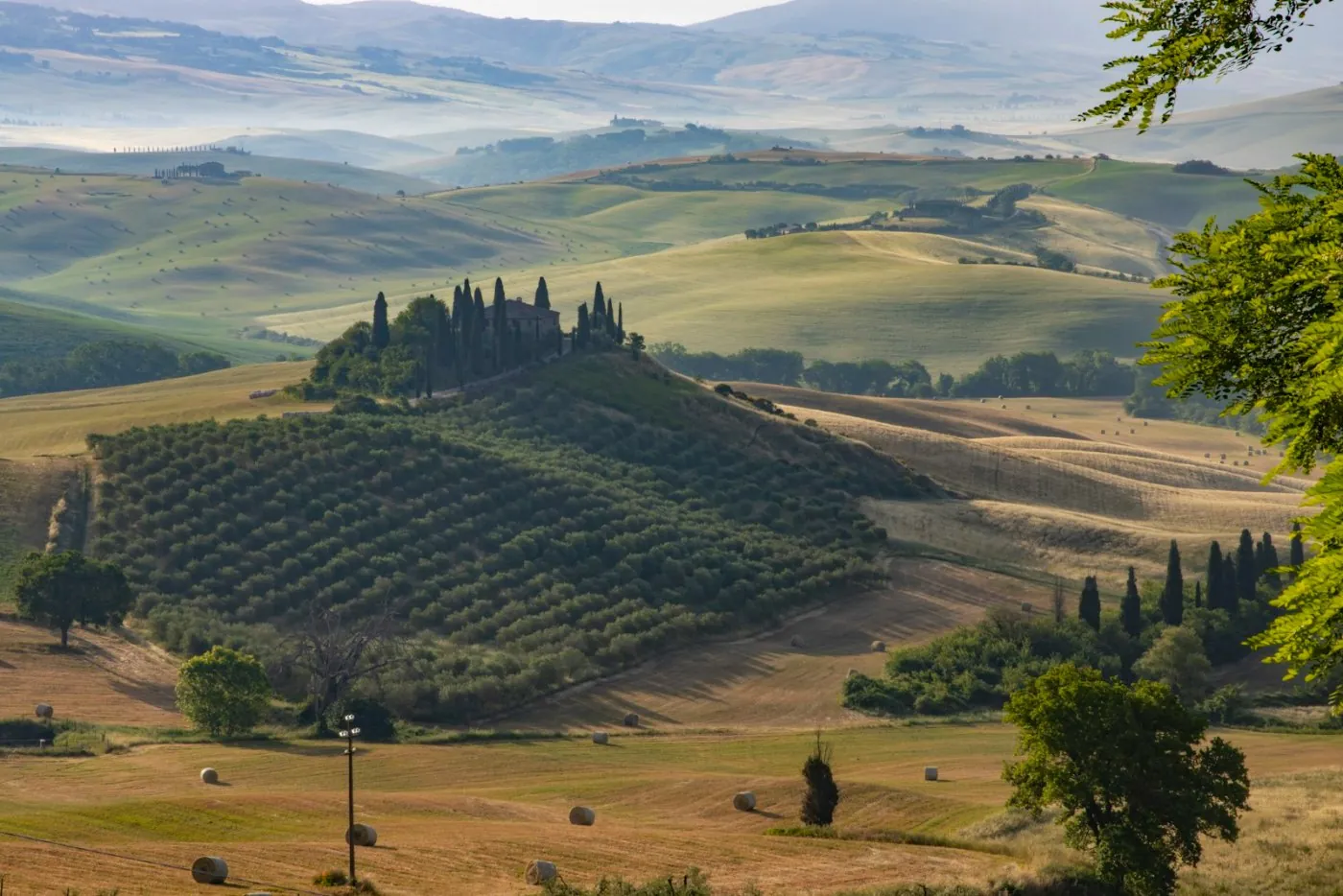
What happened in Cortona
Over the first weekend of October, at least seven masked men entered Antinori's warehouse near Cortona, in the province of Arezzo. The alarm stayed silent, the cameras were out, and the crew used the winery's own forklifts to load two large trucks. Staff found the gap when they arrived on Monday. Antinori kept quiet until Friday 9 October so it wouldn't get in the way of the investigation.
What they took was precise. Every bottle was from the 2023 vintage, and all of it was one of the house's three most collected reds: Tignanello, Solaia and Guado al Tasso, about 10,000 of each according to Antinori's communications office. Those wines sell for roughly €150 to €500 a bottle. They'd already been packed for export, which is why a few hours was enough.
The detail keeping the story alive is the alarm. Lorenzo Vivoli, who works in Antinori's communications office, told Fortune it had been switched off from inside the building the day before. The company says it doesn't know how. As of 13 October no arrests have been announced, and the police have asked Antinori not to release its footage.
Antinori was founded in 1385 and is now run by the family's 26th generation. Its chief executive, Renzo Cotarella, called the theft unprecedented for Italian wine. The previous Italian record, according to Corriere della Sera, was a 2017 theft at Cervia worth €750,000. It also wasn't isolated. At the end of June, Banfi lost about 3,000 bottles of Alta Langa sparkling wine from its winery at Strevi, in Piedmont, and Cotarella has said the same gang may be behind other recent raids on Italian wineries.
Why a warehouse, not a winery
Look at where it happened. Tuscany has eleven DOCGs, the top tier of Italian appellation, and famous cellars in nearly every one of them. Montepulciano, home of Vino Nobile, is about 21 km from Cortona as the crow flies.
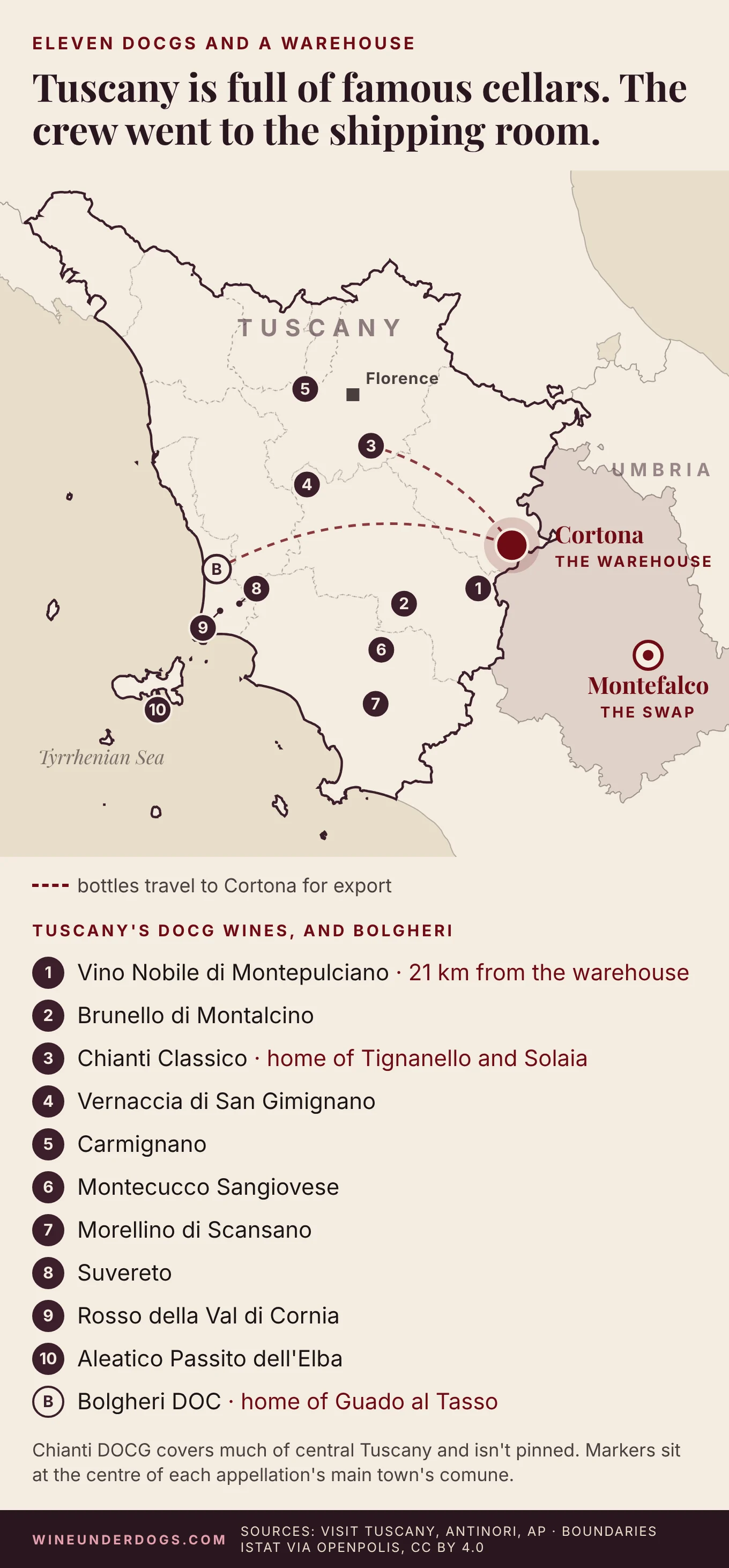
The crew didn't need any of those cellars. Antinori grows Tignanello and Solaia at its Chianti Classico estate and Guado al Tasso on the coast at Bolgheri, about 75 km apart in a straight line. Then it sends the bottles to Cortona, which the company describes as the warehouse where all of them go before they're dispatched. That's how three of the most collected reds in Italy came to be in the same building, in cases, on pallets. A winery spreads its value across a hillside. A shipping room stacks it where a forklift can reach.
What it was actually worth
The headline number depends on whose shelf you price it on.
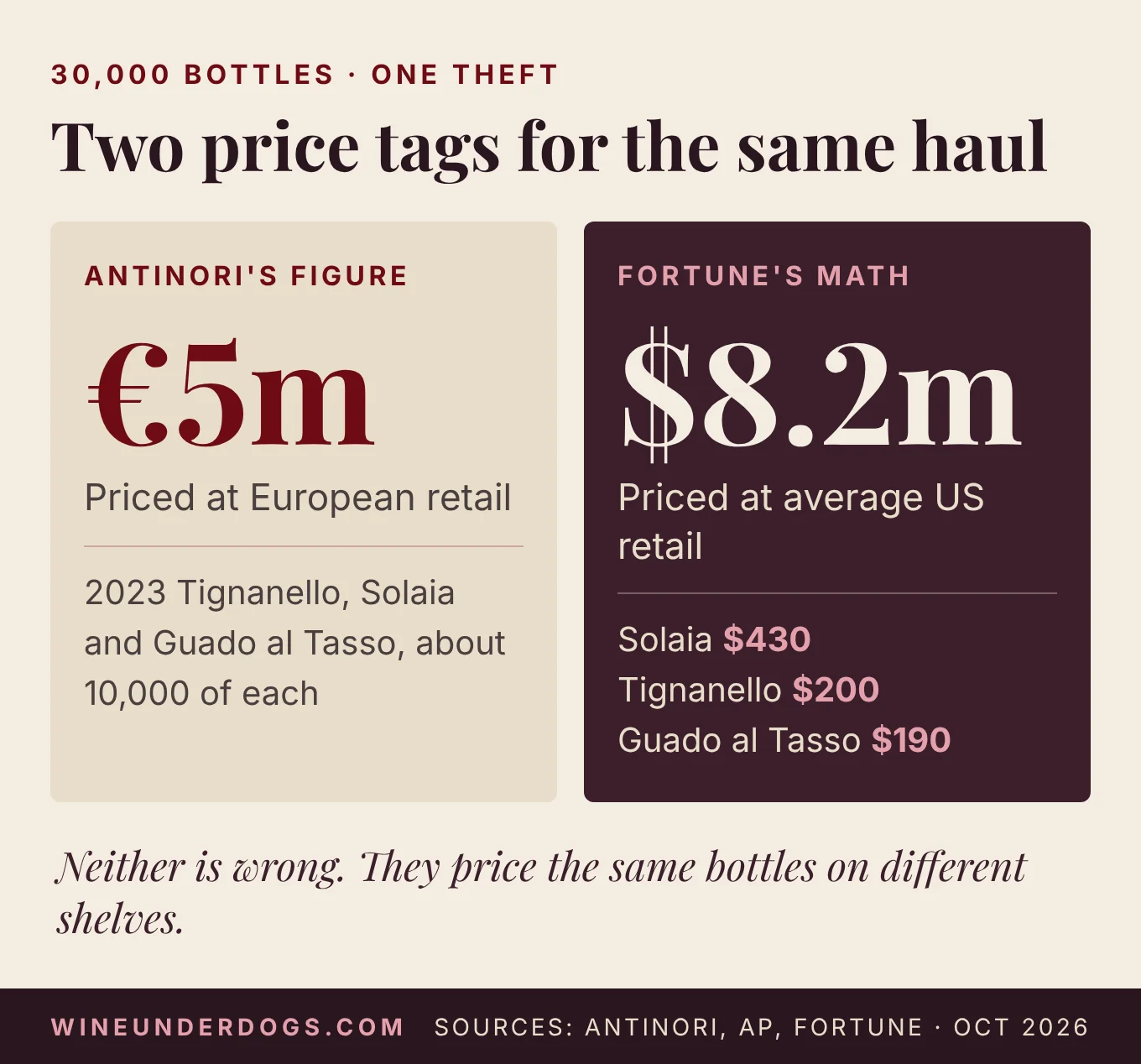
Antinori puts its loss at about €5 million, at European retail. Fortune ran the same bottles at average American prices, about $430 for Solaia, $200 for Tignanello and $190 for Guado al Tasso, and reached roughly $8.2 million. Both are honest. One figure in circulation isn't: a widely shared report put the haul at 300,000 bottles. It was 30,000. And Corriere reports that Antinori's insurance doesn't cover a loss this size, which tells you how unthinkable a two-truck raid on a winery was until now.
If someone offers you a 2023 Tignanello
Antinori has warned partners and customers in the 170 countries it sells to about offers outside its official channels. Take that literally.
- Know the profile. A 2023 Tignanello, Solaia or Guado al Tasso, from a seller you don't know, at less than the going rate.
- The sticker won't save you. Antinori's anti-counterfeit label proves a bottle is genuine. The company says it doesn't track where a bottle goes, so a stolen bottle scans as real.
- Provenance is the product. At this level you're paying for how a wine was kept as much as what's in it. These 30,000 bottles spent their first weeks in the back of a truck, which is the one history no collector wants to buy.
- In Italy, buying stolen goods is itself a crime.
The wine nobody would steal
Here's the uncomfortable truth, and it happens to cut our way. Underdog wine is cheap for the same reason nobody steals it: not enough people want it yet. A gang with forklifts needs a bottle a buyer will recognise across a room and pay hundreds for. Demand is the whole business model of a heist, and it's also the whole reason a Tignanello costs what it does.
So the smart money in central Italy this week goes to the serious red that has no fence. Montefalco Sagrantino comes from the hills around a single Umbrian town, from a grape usually ranked as the most tannic in Italy. It isn't a Tignanello and shouldn't pretend to be. Tignanello is mainly Sangiovese with a little Cabernet Sauvignon and Cabernet Franc, broad and polished. Sagrantino is darker, sterner and built for the long haul. If what draws you to a Super Tuscan is the feeling of a grown-up Italian red that rewards patience, Sagrantino gives you that for a fraction of the money. If what you want is the plush Cabernet gloss, it won't.
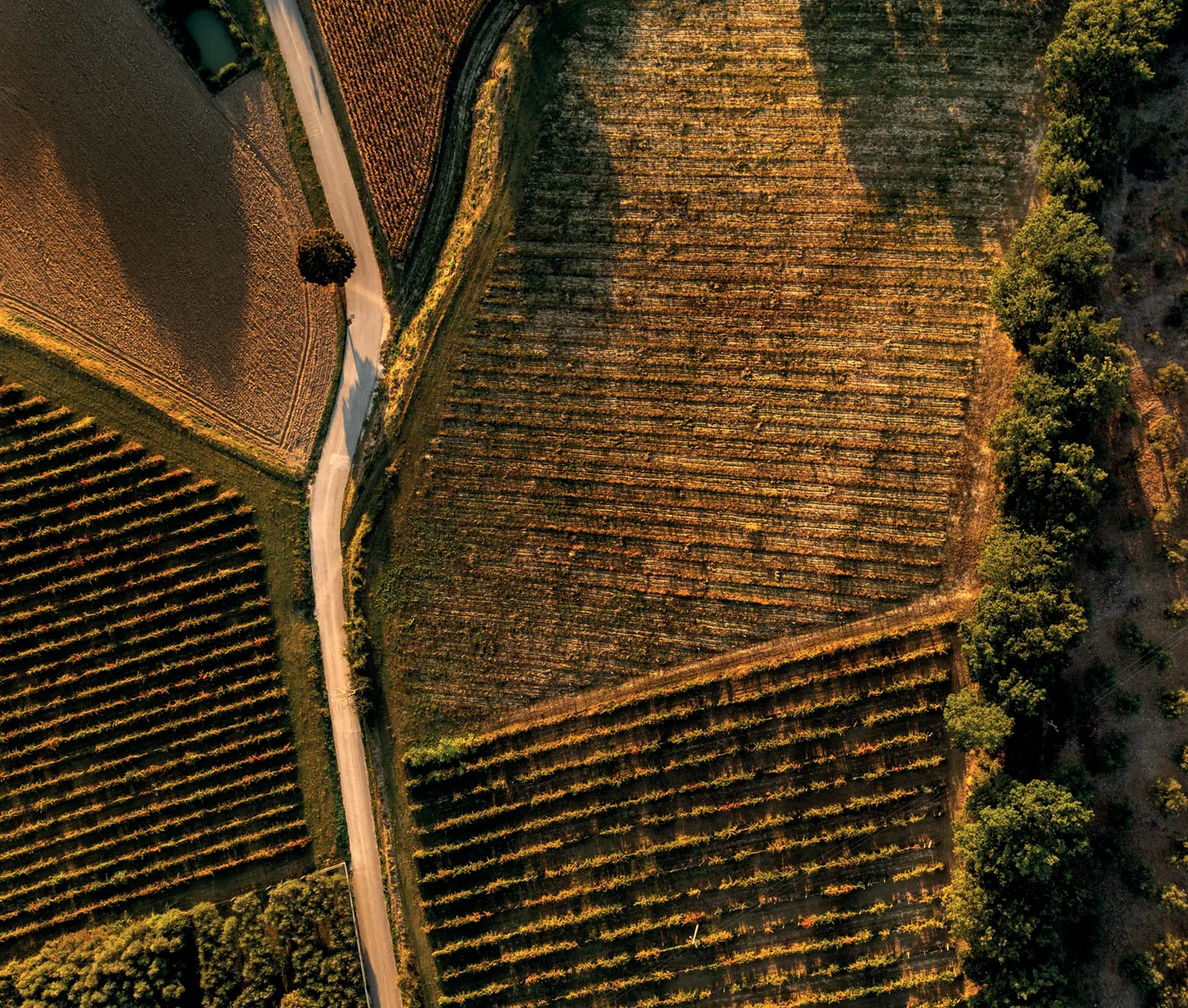
It's also changing. When I asked the head of the Montefalco consortium about it this summer, he told me Sagrantino is getting softer, and why. My guide to the grape has the rest.
Two bottles to buy instead
How I picked these: both were in stock at wine.com when I checked on 13 October 2026, and both come from producers with a long record in Montefalco. I haven't tasted these vintages. The notes below are the producers' and the critics', and they're labelled that way.
Disclosure: some links here are affiliate links — if you buy through them I may earn a small commission, at no extra cost to you. Learn more You must be 21+ to buy alcohol in the United States.Wine.com is the seller: they take the payment, ship the bottle and handle returns, and what's available depends on the state you pick at checkout. I never see your order.
Arnaldo Caprai Collepiano 2020. Caprai is the house most responsible for putting Sagrantino back on the map; Marco Caprai took over his father's estate in 1988 and spent the decades since championing the grape. The producer describes dark fruit, red plum, dried herbs and spice, with fresh, firm tannin. Wine Spectator rated it 92 (read 13 October 2026). The catch: it's 15.5% alcohol and young, and that same Wine Spectator review places its best drinking from 2030. Open it now only with a long decant and a plate of something rich.
Arnaldo Caprai Collepiano 2020, the benchmark (opens on Wine.com) Around $52 · checked October 2026Colpetrone Memoira 2017. Three more years in bottle, so closer to ready, at about half the price. The producer describes red fruit, spice, a touch of vanilla and a long, velvety finish. The catch: the listing carries no critic review, so you're trusting the grape and the producer rather than a score.
Colpetrone Memoira 2017, the one to open sooner (opens on Wine.com) Around $28 · checked October 2026What to skip: any 2023 Tignanello, Solaia or Guado al Tasso from a seller who can't show you where it's been. Not because the wine is bad, but because this month you can't know whose it was.
New to wine? Start here

Wine Match
Five guilty pleasures, yes or no. Ben finds the wine you’d actually like. You don’t need to know anything about wine. Ben certainly doesn’t.
Wine Underdogs is for readers of legal drinking age.
BenFive things. Yes or no. I'll do the rest.
Every wine fact here comes from the grape guides on Wine Underdogs. Ben has never opened a bottle, and neither does this game. For readers 21 and over.
Frequently asked questions
What was stolen in the Antinori wine heist?
About 30,000 bottles of three Marchesi Antinori reds, all from the 2023 vintage: Tignanello, Solaia and Guado al Tasso, roughly 10,000 of each by the company's account. They were taken from Antinori's warehouse near Cortona, in Tuscany's province of Arezzo, over the first weekend of October 2026, and the theft was made public on 9 October.
How much was the stolen Antinori wine worth?
Antinori puts the loss at about €5 million, at European retail prices. Priced at average US retail, Fortune calculated roughly $8.2 million. Both figures describe the same bottles. Reports of 300,000 bottles are wrong by a factor of ten.
How can I tell if a bottle of Tignanello is stolen?
You usually can't from the bottle. Antinori's anti-counterfeit sticker confirms a bottle is genuine, but the company says it doesn't track where a bottle goes. Treat any 2023 Tignanello, Solaia or Guado al Tasso offered outside normal retail, especially below the going price, as suspect, and buy only from a merchant who can show where the wine came from.
What is a cheaper alternative to Tignanello?
Montefalco Sagrantino, from Umbria, is the closest underdog in spirit: a serious, structured central Italian red built to age, at a fraction of the price. It is sterner and more tannic than Tignanello, which is mainly Sangiovese with a little Cabernet Sauvignon and Cabernet Franc, so expect grip rather than polish.
JOIN THE PACK
Whatever you drink now, there's an underdog you'd like more.
One overlooked wine at a time: what it tastes like, the famous one it can replace, and the catch. Free.